Pascal 1623-1662The moralist who advocated dressing up, the ascetic who liked a flutter, the devout Christian who lauded vanity, Pascal is a funnier, more ironic philosopher than his reputation as an anguished existentialist would suggest.Yet however irreverent the terms of his ironic project, its underlying impetus is both serious and profound. In this superb new introduction to the thinker and his thought, Ben Rogers demonstrates the deep wisdom of Pascals defence of popular folly - a defence which he used to highlight the higher delusions of the learned.Setting the Pensees in the context of Pascals life and philosophical career, Rogers reveals how their apparent frivolity underpins a fascinating, far-reaching and still challenging body of moral and political thought. His remarkable guide offers an eye-opening account of the work of a marvellous and much neglected thinker.
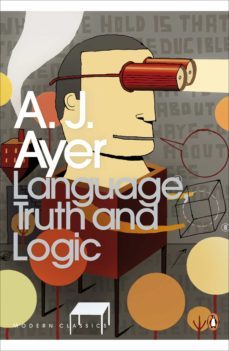
Irreverent and electrifying, when A. J. Ayers epoch-making work was published in 1936 it shook the foundations of British philosophy, and made its author notorious. He argues that if you cannot prove a statement by scientific methods, or by experience, it is literally meaningless. In this sense, everything else morals, aesthetics, religion, philosphy itself becomes nonsensical. For example, to say that murder is wrong is a meaningless statement you are simply saying that you do not like it. Ayers shocking argument, known as Logical Positivism, was a direct challenge to orthodox morality. Yet it became a classic text, revitalizing British philosophy and setting it on an entirely new course.
If you cant prove something, it is literally senseless - so argues Ayer in this irreverent and electrifying book. Statements are either true by definition (as in maths), or can be verified by direct experience. Ayer rejected metaphysical claims about god, the absolute, and objective values as completely nonsensical. Ayer was only 24 when he finished LANGUAGE, TRUTH & LOGIC, yet it shook the foundations of Anglo-American philosophy and made its author notorious. It became a classic text, cleared away the cobwebs in philosophical thinking, and has been enormously influential.