This fascinating book describes the development of forensics from the nineteenth century to the present. Cases are classified by 15 forensic types then arranged chronologically. Features riveting stories of how forensic experts were able to identify a person with only one one thousandth of her body parts, the dramatic tale of how a psychological profile helped catch a dangerous criminal who drank his victim's blood, and numerous more narratives of how science triumphed to bring the guilty to justice and free the innocent.
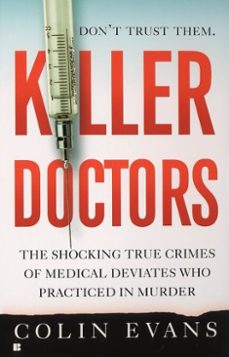
Doctors have at their disposal a number of devious ways to extinguish lifeand just as many motivesshould they desire. Some do. In Killer Doctors, the dark side of the men in white is revealed. So are the appalling crimes of those trusted healers. Michael Swango, a.k.a. Dr. Death, one of historys most notorious serial killers who may have killed at least 35 patients. Charles Friedgood, whose shoddy surgeries and gruesome incompetence led to murderand exposed the AMAs brotherhood of silence. The dim Bernard Finch, whose near-farcical plot to kill his wife revealed a murder so insanely ill-conceived and executed that it left jurors dumbfounded, amused, and deadlocked. Plus even more shocking stories of grave malpractice, morbid bedside manners, and the chilling exploitations of a privileged profession.
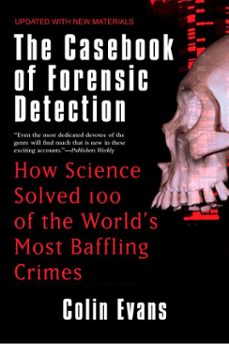
Brilliant and persistent scientific work that brought murderers like John List, Ted Bundy, and Jeffrey MacDonald to justice.Publishers Weekly Landmarks of forensic science [that] are representative of the evolution of the discipline and its increasingly prominent role in crime solving.Library Journal Modern ballistics and the infamous Sacco and Vanzetti case. DNA analysis and the 20th centurys most wanted criminalthe hunt for Josef Mengele. The Icemana contract killer and one-man murder machine. Scientific analysis and historys greatest publishing fraudthe Hitler Diaries. How the perfect crime can land you in prison. In a world so lawless that crimes must be prioritized, some cases still stand outnot only for their depravity but as landmarks of criminal detection. Updated with new material, this collection of 100 groundbreaking cases vividly depicts the horrendous crimes, colorful detectives, and grueling investigations that shaped the science of forensics. In concise, fascinating detail, Colin Evans shows how far weve come from Sherlock Holmess magnifying glass. Although no crime in this book is ordinary, many of the perpetrators are notorious: Ted Bundy, John Wayne Gacy, John List, Bruno Hauptmann, Jeffrey Macdonald, Wayne Williams. Along with the cases solved, fifteen forensic techniques are coveredincluding fingerprinting, ballistics, toxicology, DNA analysis, and psychological profiling. Many of these are crime fighting firsts that have increased the odds that todays techno sleuths will get the bad guys, clear the innocentand bring justice to the victims and their families.
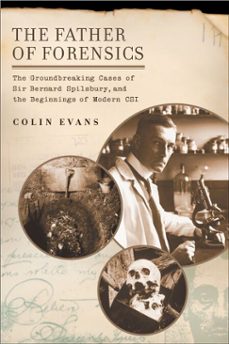
Before there was CSI, there was one man who saw beyond the crime and into the future of forensic science. His name was Bernard Spilsburyand, through his use of cutting-edge science, he single-handedly brought criminal investigations into the modern age. Starting out as a young, charismatic physician in early twentieth-century Britain, Spilsbury hit the English justice systemand the front pageslike a cannonball, garnering a reputation as a real-life Sherlock Holmes. He uncovered evidence others missed, stood above his peers in the field of crime reconstruction, relentlessly exposed discrepancies between witness testimony and factual evidence, and most importantly, convicted dozens of murderers with hard-nosed, scientific proof. This is the fascinating story of the life and work of Bernard Spilsbury, historys greatest medical detective, and of the cases that not only made him a celebrity, but also inspired the astonishing science of criminal investigation in our own time.
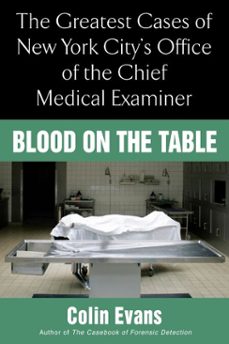
For almost a century, New York Citys Office of the Chief Medical Examiner has presided over the dead. Over the years, the OCME has endured everything-political upheavals, ghastly murders, bloody gang wars, the 9/11 terrorist attacks, and non-stop battles for power and influence-and remains the final authority in cases of sudden, unexplained, or violent death. Founded in 1918, the OCME has evolved over decades of technological triumphs and all-too human failure to its modern-day incarnation as the foremost forensics lab in the world, investigating an average caseload of over 15,000 suspicious deaths a year. This is the behind-the-scenes chronicle of public service and private vendettas, of blood in the streets and back-room bloodbaths, and of the criminal cases that made history and headlines.