
 Librerías
 Feliz Día de la Madre
eReader Vivlio Light HD Color con 15 € dto.
Libros para el Día de la Madre

Regala historias inolvidables para celebrar el Día de la Madre






Feliz Día de la Madre
El mejor regalo para la mejor



Métodos de idiomas

¿Qué idioma estás aprendiendo?
Dragon ball

¡La aventura te espera! Completa tu colección de Dragon Ball



Mate

The global bestseller and TikTok sensation



Dia de la Mare

Tenim els millors regals per a mamà



Disfruta los audiolibros 🎧

Los mejores audiolibros en Casa del Libro



eReader Vivlio Light Color
15 euros de descuento


eBooks de , página 16266 de 115613
Filtros

BRADLEY, JAHZARA
Nicole Bradley, M.Ed. 9798987307885
eBook

ELLIS, PATRICIA G.
epubli 9783565332953
eBook

WILLIAMS, ACKEEN. N.
Ackeem 9798233336843
eBook

CONNER, LINDA M.
epubli 9783565333868
eBook

LAVERY, D.B.
D.B. Lavery 9798233412080
eBook

佛手印
佛手印 9798233813177
eBook

WEAVER, JONATHAN
epubli 9783565333004
eBook

HUNTER, E L
Legendary Archives Publishing 9798233677809
eBook

CLAIRE, BELLA ST.
Bella St. Claire 9798233796050
eBook

ABISHUA, DEREK
University of Excellence: Agile MBA 9798233977237
eBook

MELO, MARCOS y PILLAR, M. S.
Marcos Melo 9798224307579
eBook

BLAKE, IMOGEN
Sakura Publishing 9798233744839
eBook

MARCUM, BRADLEY C.
epubli 9783565332854
eBook

LCSW, NIESHA DAVIS-MASSEY, THD
Christian Living Books, Inc. 9781562296636
eBook

BEST, NATHAN
Big Sky Publishing 9781923514423
eBook

Hachette Romans 9782017911029
eBook

ROSTOVA, ALINA
Alina Rostova 9798224040476
eBook

KIMMELS, PATRICK
Patrick Kimmels 9798233228308
eBook

HALOR, KYREN
Kyren Halor 9798233695704
eBook
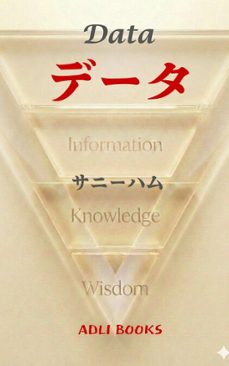
サニーハム
ADLI BOOKS 9798233423604
eBook