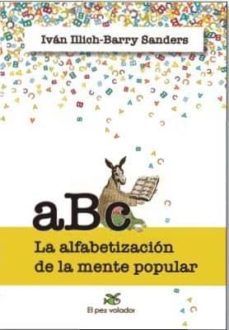
In ABC... philosopher and cultural analyst Ivan Illich and medieval scholar and literary critic Barry Sanders have produced an original, meticulous and provocative study of the advent, spread and present decline of literacy. They explore he impact of the alphabet on fundamental thought processes and attitudes, on memory, on political groupings and religous and cultural expectations. Their examination of the present erosion of literacy in the new technological languages of newspeak and uniquack and they point out how new attitudes to language are altering our world view; our sense of self and of community.
Nuestra civilización ha sido construida con la palabra escrita y todos nosotros somos hijos del libro. O lo éramos, hasta el actual advenimiento de los sistemas tecnológicos. Este libro realiza un original y provocativo estudio del sentimiento, la expansión y el declive de la alfabetización y de cómo las letras han ido configurando un tipo humano, su sentido del yo y de la comunidad, sus formas de comunicación, sus expectativas y necesidades, sus sueños y sus pesadillas. Eso, sin olvidar la opulenta floración de instituciones, políticas, religiosas o filantrópicas, nacidas para satisfacer, aliviar o simplemente gestionar todo eso. Iván illich y Barry Sanders rastrean el misterioso mundo de la totalidad, el desarrollo del lenguaje escrito desde la Antigüedad y el impacto de los sistemas tecnológicos y su lengua.
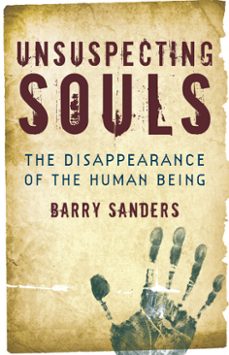
During the nineteeth century, something vital went missing: the human being. In Unsuspecting Souls, Barry Sanders examines modern societys indifference to the individual. From the Industrial Revolution, where the disappearance of care for human beings begins slowly, to our own age, where societal events require less persontoperson interaction, Sanders laments that what makes us most human is slowly dying. Our days are filled with little but a continuous bombardment of "information," demands on our attention, that brings us out of our world and into one of inhumanity and abstraction. We are losing entirely any palpable attachment to our physical reality.And weve also lost the original sense of a collective consciousness. This loss has been fomenting for two centuries now, dating back to the rise of European powers and worldwide colonization. This has led to the notion that we need to define what is torture, an idea that not long ago would have seemed absurd, and need to pick our poisons among several forms of radical fundamentalisms, each one not only a threat to the other but a threat to humanity itself. From Edgar Allen Poe to Abu Ghraib, this is a fascinating and worrisome story, impeccably researched and compellingly written.