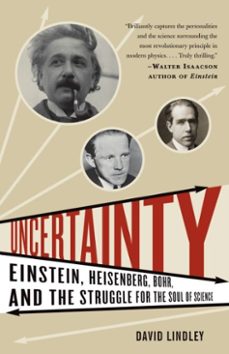
La extraordinaria historia de una asombrosa idea científica que provocó una batalla entre las mayores mentes del siglo XX, y que influyó no sólo en la física, sino en el mundo de la indagación intelectual en general, de la critica literaria a la antropologia, pasando por el periodismo. La descripcion de Lindley de una de las mas espectaculares revoluciones en el pensamiento cientifico es sencillamente fascinante. Las ideas y las vidas de los creadores de dichas ideas, aparecen magistralmente entrelazadas (Mario Livio). Una aproximacion historica a un momento apasionante y crucial en la fisica moderna. El libro retrata el encuentro y el conflicto entre tres genios cientificos del siglo XX: Einstein, Heisenberg y Bohr. Ademas de rigurosamente documentado, el libro es ameno y agil, se lee como una novela.
¿Resulta viable en la actualidad el planteamiento científico de la idea inspiradora de las novelas de Michael Crichton «Parque Jurásico» y «El mundo perdido», llevadas al cine por Steven Spielberg, s
In 1900 many eminent scientists did not believe atoms existed, yet within just a few years the atomic century launched into history with an astonishing string of breakthroughs in physics that began with Albert Einstein and continues to this day. Before this explosive growth into the modern age took place, an all-but-forgotten genius strove for forty years to win acceptance for the atomic theory of matter and an altogether new way of doing physics. Ludwig Boltz-mann battled with philosophers, the scientific establishment, and his own potent demons. His victory led the way to the greatest scientific achievements of the twentieth century.Now acclaimed science writer David Lindley portrays the dramatic story of Boltzmann and his embrace of the atom, while providing a window on the civilized world that gave birth to our scientific era. Boltzmann emerges as an endearingly quixotic character, passionately inspired by Beethoven, who muddled through the practical matters of life in a European gilded age.Boltzmanns story reaches from fin de siecle Vienna, across Germany and Britain, to America. As the Habsburg Empire was crumbling, Germanys intellectual might was growing; Edinburgh in Scotland was one of the most intellectually fertile places on earth; and, in America, brilliant independent minds were beginning to draw on the best ideas of the bureaucratized old world.Boltzmanns nemesis in the field of theoretical physics at home in Austria was Ernst Mach, noted today in the term Mach I, the speed of sound. Mach believed physics should address only that which could be directly observed. How could we know that frisky atoms jiggling about corresponded to heat if we couldnt see them? Why should we bother with theories that only told us what would probably happen, rather than making an absolute prediction? Mach and Boltzmann both believed in the power of science, but their approaches to physics could not have been more opposed. Boltzmann sought to explain the real world, and cast aside any philosophical criteria. Mach, along with many nineteenth-century scientists, wanted to construct an empirical edifice of absolute truths that obeyed strict philosophical rules. Boltzmann did not get on well with authority in any form, and he did his best work at arms length from it. When at the end of his career he engaged with the philosophical authorities in the Viennese academy, the results were personally disastrous and tragic. Yet Boltzmanns enduring legacy lives on in the new physics and technology of our wired world.Lindleys elegant telling of this tale combines the detailed breadth of the best history, the beauty of theoretical physics, and the psychological insight belonging to the finest of novels.
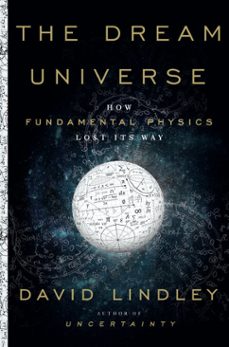
A vivid and captivating narrative about how modern science broke free of ancient philosophy, and how theoretical physics is returning to its unscientific rootsIn the early seventeenth century Galileo broke free from the hold of ancient Platonic and Aristotelian philosophy. He drastically changed the framework through which we view the natural world when he asserted that we should base our theory of reality on what we can observe rather than pure thought. In the process, he invented what we would come to call science. This set the stage for all the breakthroughs that followed--from Kepler to Newton to Einstein. But in the early twentieth century when quantum physics, with its deeply complex mathematics, entered into the picture, something began to change. Many physicists began looking to the equations first and physical reality second. As we investigate realms further and further from what we can see and what we can test, we must look to elegant, aesthetically pleasing equations to develop our conception of what reality is. As a result, much of theoretical physics today is something more akin to the philosophy of Plato than the science to which the physicists are heirs. In The Dream Universe, Lindley asks what is science when it becomes completely untethered from measurable phenomena?
The gripping, entertaining, and vividly-told narrative of a radical discovery that sent shockwaves through the scientific community and forever changed the way we understand the world.Werner Heisenbergs uncertainty principle challenged centuries of scientific understanding, placed him in direct opposition to Albert Einstein, and put Niels Bohr in the middle of one of the most heated debates in scientific history. Heisenbergs theorem stated that there were physical limits to what we could know about sub-atomic particles; this uncertainty would have shocking implications. In a riveting and lively account, David Lindley captures this critical episode and explains one of the most important scientific discoveries in history, which has since transcended the boundaries of science and influenced everything from literary theory to television.
Incertidumbre es la crónica del nacimiento y la evolución de uno de los descubrimientos más significativos en la historia de la ciencia moderna y retrata la pugna desatada entre ideas y personalidades contrapuestas. En 1927, el joven fisico aleman Werner Heisenberg introducia el principio de incertidumbre, desafiando el paradigma cientifico imperante desde hacia siglos. A partir de sus propios descubrimientos sobre la teoria quantica, demostro que, en muchas mediciones fisicas, tan solo se obtenia una porcion de informacion al precio de perder otra. El principio de Heisenberg implicaba que los conceptos cientificos no son absolutos, sino que su significado depende de los experimentos realizados para su obtencion. De esta manera, se minaba la creencia de que la ciencia podia revelar el mundo fisico con una precision y detalle sin limites y se contraponia directamente a la posicion del reverenciado Albert Einstein.