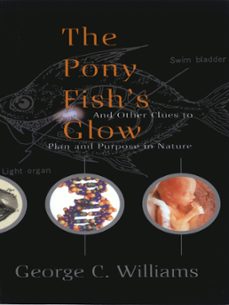
We may regard ourselves as the most advanced species on the planet, but have we really reached our optimum design? Isntt there always room for improvements? Before you answer, let noted evolutionary biologist George C. Williams remind you of both the exquisite adaptations and absurd maladaptations nature has bestowed upon us, the self-proclaimed "pinnacle of evolution."Picking up where Darwin left off, Williams combines philosophical perspective and scientific method to provide a foundation for the answers to some fascinating questions. He explains why our bodies have to deteriorate so disastrously with old age. He gives us logical reasons to explain why we crave foods like sugar and fat that have been proven time and again to be detrimental to our health. And Williams single-handedly deflates our Homo sapiens sapiens ego with such insights as: Our eyesight -- it may seem superior, but not when compared to that of the invertebrate squid, whose eye has developed over time to prove more efficient than ours. And wouldntt it make more sense to have a third eye, located on the back of the head? We could have stereoscopic vision in front and rear-vision warning us of danger sneaking up behind. Rear-view mirrors would become a thing of the past. And why stop at three eyes? This fascinating new book is markedly different from all previous work on evolutionary biology. Using the pony fish and its luminescent abdomen as the perfect evolutionary mystery, Williams explores the intricacies of natures designs. Rather than telling us how or why the pony fish got its light, Williams explains the functional reasons why the pony fish keeps its light. He also explains why our species keeps arbitrary or malfunctioned features like the reproductive and excretory systems sharing of parts. George C. Williams, one of todays most qualified evolutionary biologists, has written an important, entertaining, and thought-provoking addition to a science that has captivated the world for almost 150 years.
The next time you get sick, consider this before picking up the aspirin: your body may be doing exactly what its supposed to. In this ground-breaking book, two pioneers of the science of Darwinian medicine argue that illness as well as the factors that predispose us toward it are subject to the same laws of natural selection that otherwise make our bodies such miracles of design. Among the concerns they raise:When may a fever be beneficial?Why do pregnant women get morning sickness?How do certain viruses "manipulate" their hosts into infecting others?What evolutionary factors may be responsible for depression and panic disorder?Deftly summarizing research on disorders ranging from allergies to Alzheimers, and form cancer to Huntingtons chorea, Why We Get Sick, answers these questions and more. The result is a book that will revolutionize our attitudes toward illness and will intrigue and instruct lay person and medical practitioners alike.