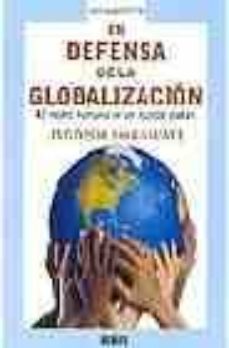
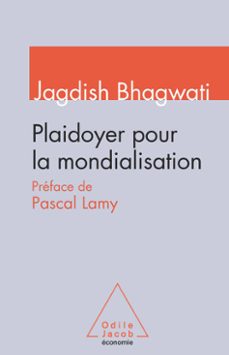
Bhagwati, JagdishThe riot-torn meeting of the World Trade Organization in Seattle in 1999 was only the most dramatic sign of the intensely passionate debate now raging over globalization, which critics blame for everything from child labour to environmental degradation, cultural homogenization, and a host of other ills afflicting poorer nations. Now Jagdish Bhagwati, the internationally renowned economist known equally for the clarity of his arguments and the sharpness of his pen, takes on the critics, revealing that globalization, when properly governed, is in fact the most powerful force for social good in the world today. Drawing on his unparalleled knowledge of international economics, Bhagwati explains why the "gotcha" examples of the critics are often not as they seem, and that in fact globalization often alleviates many of the problems for which it has been blamed. For instance, when globalization leads to greater general prosperity in an underdeveloped nation, it quickly reduces child labour and increases literacy (when parents have sufficient income, they send their children to school, not work). The author describes how globalization helps the cause of women around the world and he shows.
Un libro provocativo, inteligente y brillante que explica qué aspectos de la globalización pueden ser positivos para el desarrollo integral de la humanidad. Un libro desmitificador que aclara todas las dudas posibles sobre la globalizacion. Un libro diferente sobre economia mundial, agil y provocador, que desmenuza con claridad conceptos basicos. Muestra, con ejemplos practicos, una posicion conciliadora sobre la tan traida y llevada globalizacion.
In its history since Independence, India has seen widely different economic experiments: from Jawharlal Nehrus pragmatism to the rigid state socialism of Indira Gandhi to the brisk liberalization of the 1990s. So which strategy best addresses Indias, and by extension the worlds, greatest moral challenge: lifting a great number of extremely poor people out of poverty? Bhagwati and Panagariya argue forcefully that only one strategy will help the poor to any significant effect: economic growth, led by markets overseen and encouraged by liberal state policies. Their radical message has huge consequences for economists, development NGOs and anti-poverty campaigners worldwide. There are vital lessons here not only for Southeast Asia, but for Africa, Eastern Europe, and anyone who cares that the effort to eradicate poverty is more than just good intentions. If you want it to work, you need growth. With all that implies.
Dans le débat passionné qui fait rage autour de la mondialisation, ses critiques font valoir les nombreux maux qu’elle inflige aux pays pauvres, du travail des enfants à la dégradation écologique en