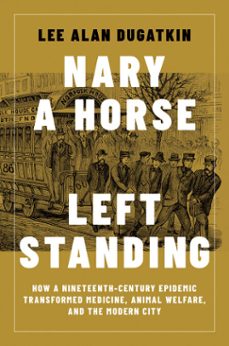
How a devastating outbreak of horse flu in the 1870s ground city life to a haltbut ultimately revolutionized animal rights, medicine, and transportation.From a veteran science writer, evolutionary biologist, historian of science, and the coauthor of the acclaimed How to Tame a Fox (and Build a Dog).In the 1870s, horses were the lifeblood of North American cities. New York, Boston, Chicago, and Toronto relied on tens of thousands of workhorses to power daily life. Then, in late 1872 and into 1873, a devastating outbreak of horse fluknown as The Great Epizooticswept across the continent.In Nary a Horse Left Standing, Lee Dugatkin chronicles this little-known crisis, revealing how the epidemic disrupted nearly every aspect of urban life. From coast to coast, livelihoods collapsed as horses lay sick, or worse dying, on stable floors, fires raged unchecked without horse-drawn wagons, and city development stalled for lack of horsepower. Just as the Gilded Age was dawning and industrialists were poised to amass fortunes, the flu slowed progress to a crawl.Yet the tragedy also catalyzed revolutions in medicine, animal rights, and transportation. Veterinary science in the U.S. was still emerging, but detailed medical reports from the epidemic helped validate germ theory and discredit outdated beliefs. The crisis also spotlighted early animal welfare efforts, with fledgling groups like the ASPCA advocating for sick horses forced to work. Finally, the sheer vulnerability of relying on animals for transport spurred a shift toward mechanized systems.As illuminating as it is humbling, the book brings to life a critical account of a crisis that still speaks to the complex public health and transportation challenges we face today.
Durante más de cien años la comunidad científica mantuvo un enconado debate acerca del significado del altruismo en los animales y en los seres humanos. Iniciada en 1859, la polémica fue muy relevante porque la posicion triunfante determinaria nuestra manera de contemplar el origen de la bondad o de la generosidad -en ultima instancia, el altruismo tiene que ver con pagar un costo personal para ayudar a otros, es decir, con lo que la mayoria de las personas quieren decir cuando hablan de hacer el bien-. En la discusion participaron biologos como Charles Darwin y Thomas Henry Huxley, pero tambien el principe ruso Piotr Kropotkin e intelectuales como George Price. Fue, finalmente, la biologia la que termino por resolver la cuestion del altruismo con una ecuacion matematica desarrollada por un biologo evolucionista llamado William D. Hamilton, que comenzo a trabajar en el tema a partir de la decada de 1960. Por primera vez, Lee Alan Dugatkin nos da a conocer en esta obra a los protagonistas del debate sobre el altruismo, los temas que abordaron y las pasiones que pusieron en juego, hasta explicar, con asombrosa claridad, la "regla de Hamilton": la formula que redujo el altruismo al frio lenguaje de la seleccion natural. Los lectores se veran arrastrados por este agil relato que entreteje la historia, la biografia y la reseña de descubrimientos cientificos.