A.F. Atkinsons first and exploratory visit to Palestine - as it was then - came when he was in his early 40s and just a few months before the Second World War started. The diary he kept from that date - in the form of bi-monthly letters back home to churches that were published faithfully in Intelligence magazine - form a remarkable historical record of one mans passion to spread the gospel in general, but in particular to the Jewish people that he loved with the love of Christ.This book, which includes all the letters as well as his own testimony, has been published to be much more than just an interesting archival account, but a help and an encouragement to all who read it who feel a call from the Lord to do His work in whatever field that may be.As it was for A.F. Atkinson, it may be a lonely work, it may be a costly work, it may be a challenging work which even seems to bear relatively little fruit this side of heaven, but the call remains loud and clear nevertheless: "Go, labor on; spend, and be spent; Thy joy to do the Fathers will; It is the way the Master went; Should not the servant tread it still?" (Horatio Bonar)."
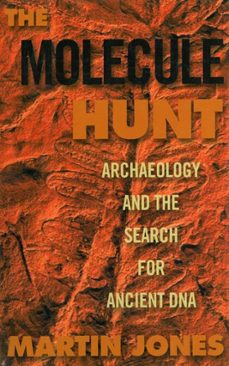
A revolution is underway in archaeology. Working at the cutting edge of genetic and molecular technologies, researchers have been probing the building blocks of ancient life-DNA, proteins, fats-to rewrite our understanding of the past. Their discoveries (including a Mitochondrial Eve, the woman from whom all modern humans descend) and analyses have helped revise the human genealogical tree and answer such questions as: How different are we from the Neanderthals? Who first domesticated horses and ancient grasses? What was life like for our ancestors? Here is science at its most engaging.
In Unlocking the Past, Martin Jones, a leading expert at the forefront of bioarchaeologythe discipline that gave Michael Crichton the premise for Jurassic Parkexplains how this pioneering science is rewriting human history and unlocking stories of the past that could never have been told before. For the first time, the building blocks of ancient lifeDNA, proteins, and fats that have long been trapped in fossils and earth and rockhave become widely accessible to science. Working at the cutting edge of genetic and other molecular technologies, researchers have been probing the remains of these ancient biomolecules in human skeletons, sediments and fossilized plants, dinosaur bones, and insects trapped in amber. Their amazing discoveries have influenced the archaeological debate at almost every level and continue to reshape our understanding of the past.Devising a molecular clock from a certain area of DNA, scientists were able to determine that all humans descend from one common female ancestor, dubbed "Mitochondrial Eve," who lived around 150,000 years ago. From molecules recovered from grinding stones and potsherds, they reconstructed ancient diets and posited when such practices as dairying and boiling water for cooking began. They have reconstituted the beer left in the burial chamber of pharaohs and know what the Iceman, the 5,000-year-old hunter found in the Alps in the early nineties, ate before his last journey. Conveying both the excitement of innovative research and the sometimes bruising rough-and-tumble of scientific debate, Jones has written a work of profound importance. Unlocking the Past is science at its most engaging.