El cambio climático representa un reto único para la economía, pudiendo afirmarse que es el mayor y más generalizado fracaso del mercado jamás visto en el mundo. Por consiguiente, el análisis económico debera ser global, abordar las consecuencias a largo plazo, estudiar a fondo la economia de los riesgos e incertidumbres y examinar la posibilidad de cambios importantes y no marginales. A fin de cumplir con estos requisitos, el Informe aprovecha ideas y tecnicas procedentes de los mas importantes sectores de la economia, con inclusion de numerosos adelantos recientes. El Informe Stern sobre el impacto del cambio climatico y el calentamiento global sobre la economia mundial. Redactado por el economista Sir Nicholas Stern por encargo del gobierno del Reino Unido fue publicado el 30 de octubre del 2006, con 700 paginas de extension, el informe supone un hito historico al ser el primer informe encargado por un gobierno, el del Reino Unido, a un economista en lugar de a un climatologo. Sus principales conclusiones afirman que se necesita una inversion equivalente al 1% del PIB mundial para mitigar los efectos del cambio climatico y que de no hacerse dicha inversion el mundo se expondria a una recesion que podria alcanzar el 20% del PIB global. El informe tambien sugiera la imposicion de ecotasas para minimizar los desequilibrios socioeconomicos
Climate change has been the source of immense challenges for ethical, economic or political analysts. We are aware of the scale of the action required to be taken and the areas in which that action is needed namely efficient energy use, low carbon technologies or deforestation. We have an idea of which technologies need to be developed. We understand the basic economic policy incentives in favour of reducing emissions, stopping deforestation and promoting more sensible use of our natural environment and its resources. The main challenge today is to obtain political adherence to actually accomplishing these changes. The Chair in Sustainable Development - Environment, Energy and Society is supported by TOTAL.
Le changement climatique est source d’immenses défis pour toute analyse éthique, économique et politique. Nous connaissons l’ampleur de l’action requise et les domaines dans lesquels il faut agir : e
* Further substantial climate change is unavoidable and the risks to the natural world, the economy and our everyday lives are immense. The way we live in the next thirty years - how we invest, use energy, organise transport and treat forests - will determine whether these risks become realities.* Although poor countries - the least responsible for climate change - will be hit earliest and hardest, all countries must adapt to the effects: hurricanes and storms strike New Orleans and Mumbai; flooding causes devastation in England and Mozambique; droughts occur in Australia and Darfur; and sea level rise will affect Florida and Bangladesh. * Lord Stern, author of the Stern Review on the Economics of Climate Change and former Chief Economist at the World Bank, is the worlds leading authority on what we can do in the face of such unprecedented threat. Action on climate change will require the greatest possible international collaboration, but if successful will ensure not just our future, but our future prosperity. * Focusing on the economic management of investment and growth from the perspective of both adaptation and mitigation, Stern confronts the most urgent questions facing us now: what is the problem? What are the dangers? What can be done to reduce emissions, at what cost? How can the world adapt? And what does all this mean for corporations, governments and individuals?* A Blueprint for a Safer Planet provides authoritative, inspirational, and hopeful, answers.
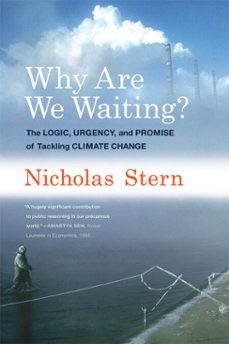
An urgent case for climate change action that forcefully sets out, in economic, ethical, and political terms, the dangers of delay and the benefits of action.The risks of climate change are potentially immense. The benefits of taking action are also clear: we can see that economic development, reduced emissions, and creative adaptation go hand in hand. A committed and strong low-carbon transition could trigger a new wave of economic and technological transformation and investment, a new era of global and sustainable prosperity. Why, then, are we waiting? In this book, Nicholas Stern explains why, notwithstanding the great attractions of a new path, it has been so difficult to tackle climate change effectively. He makes a compelling case for climate action now and sets out the forms that action should take.Stern argues that the risks and costs of climate change are worse than estimated in the landmark Stern Review in 2006and far worse than implied by standard economic models. He reminds us that we have a choice. We can rely on past technologies, methods, and institutionsor we can embrace change, innovation, and international collaboration. The first might bring us some short-term growth but would lead eventually to chaos, conflict, and destruction. The second could bring about better lives for all and growth that is sustainable over the long term, and help win the battle against worldwide poverty. The science warns of the dangers of neglect; the economics and technology show what we can do and the great benefits that will follow; an examination of the ethics points strongly to a moral imperative for action. Why are we waiting?