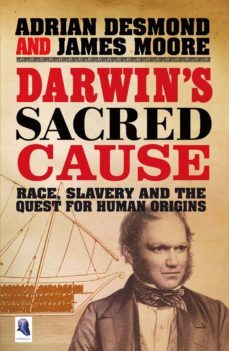
This book, by Darwin''s most celebrated modern biographers, gives a completely new explanation of how he came to his shattering theories about human origins. Until now, Desmond and Moore argue, the source of the moral fire which gives such intensity and urgency to Darwin''s ideas has gone unnoticed. By examining minutely Darwin''s manuscripts and correspondence (published and unpublished) and covert notebooks, where many of the clues lie, they show that the key to unlocking the mystery of how such an ostensibly conservative man could hold views which his contemporaries considered both radical and bestial, lay in his utter detestation of slavery. "Darwin''s Sacred Cause" will be one of the major contributions to the worldwide Darwin anniversary celebrations in 2009.
In the 1830s, decades before Darwin published the Origin of Species, a museum of evolution flourished in London. Reign of the Beast pieces together the extraordinary story of this lost working-mans institution and its enigmatic owner, the wine merchant W. D. Saull. A financial backer of the anti-clerical Richard Carlile, the Devils Chaplain Robert Taylor, and socialist Robert Owen, Saull outraged polite society by putting humanitys ape ancestry on display. He weaponized his museum fossils and empowered artisans with a knowledge of deep geological time that undermined the Creationist base of the Anglican state. His geology museum, called the biggest in Britain, housed over 20,000 fossils, including famous dinosaurs. Saull was indicted for blasphemy and reviled during his lifetime. After his death in 1855, his museum was demolished and he was expunged from the collective memory. Now multi-award-winning author Adrian Desmond undertakes a thorough reading of Home Office spy reports and subversive street prints to re-establish Saulls pivotal place at the intersection of the history of geology, atheism, socialism, and working-class radicalism.
This biography of Charles Darwin attempts to capture the private unknown life of the real man - the gambling and gluttony at Cambridge, his gruelling trip round the globe, his intimate family life, worries about persecution and thoughts about God. Central to all of this, his pioneering efforts on the theory of evolution now that recent studies have overturned the commonplace views of Darwin that have held for more than a century.
In this remarkable book Adrian Desmond and James Moore, world authorities on Darwin, give a completely new explanation of how Darwin came to his famous view of evolution, which traced all life to an ancient common ancestor. Darwin was committed to the abolition of slavery, in part because of his familys deeply held beliefs. It was his Sacred Cause and at its core lay a belief in human racial unity. Desmond and Moore show how he extended to all life the idea of human brotherhood held by those who fought to abolish slavery, so developing our modern view of evolution.Through massive detective work among unpublished family correspondence, manuscripts and rare works, the authors back up their compelling claim. Leading apologists for slavery in Darwins day argued that blacks and whites had originated as separate species, with whites superior. Creationists too believed that man was superior to other species. Darwin abhorred such arrogance; he declared it more humble & ... true to see humans created from animals. Darwin gave all the races - blacks and whites, animals and plants - a common origin and freed them from creationist shackles. Evolution meant emancipation.Darwins Sacred Cause restores Darwins humanitarianism, tarnished by atheistic efforts to hijack his reputation and creationist attempts to smear him. Desmond and Moore argue that only by understanding Darwins Christian abolitionist inheritance can we shed new light on the perplexing mix of personal drive, public hesitancy and scientific radicalism that led him finally in 1871 to publish The Descent of Man, and Selection in Relation to Sex. The result is an epoch-making study of this eminent Victorian.