Es autor de The Puritan Ordeal, que ganó el Lionel Trilling Award de la Universidad de Columbia, La muerte de Satán, Required Reading: Why Our American Classics Matter Now y The Real American Dream: A Meditation on Hope. Colabora regularmente en The New York Review of Books, The New Republic, The New York Times Book Review, Raritan y otras publicaciones. En 2001 fue nombrado miembro de la American Academy of Arts and Sciences y en 2003 fue designado académico del año por el New York Council for the Humanities. Es miembro del consejo del National Humanities Center y de la Library of America, y ha sido vicepresidente del PEN American Center. Es director del Departamento de Estudios Americanos de la Universidad de Columbia.
Recibe novedades de ANDREW DELBANCO directamente en tu email

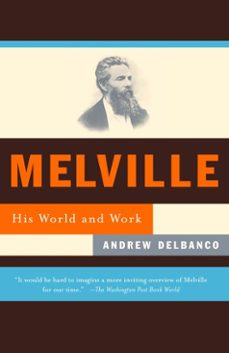
If Dickens was nineteenth-century London personified, Herman Melville was the quintessential American. With a historians perspective and a critics insight, award-winning author Andrew Delbanco marvelously demonstrates thatMelville was very much a man of his era and that he recorded in his books, letters, and marginalia; and in conversations with friends like Nathaniel Hawthorne and with his literary cronies in Manhattan an incomparable chapter of American history. From the bawdy storytelling of Typee to the spiritual preoccupations building up to and beyond Moby Dick, Delbanco brilliantly illuminates Melvilles life and work, and his crucial role as a man of American letters.
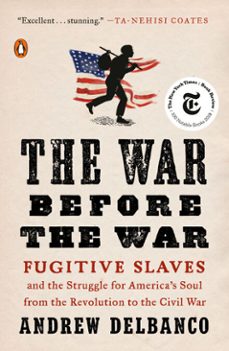
Excellent . . . stunning. Ta-Nehisi CoatesThe devastating story of how fugitive slaves drove the nation to Civil WarA New York Times Notable Book Selection * Winner of the Mark Lynton History Prize* Winner of the Anisfield-Wolf Book Award * A New York Times Critics Best Book For decades after its founding, America was really two nationsone slave, one free. There were many reasons why this composite nation ultimately broke apart, but the fact that enslaved black people repeatedly risked their lives to flee their masters in the South in search of freedom in the North proved that the "united" states was actually a lie. Fugitive slaves exposed the contradiction between the myth that slavery was a benign institution and the reality that a nation based on the principle of human equality was in fact a prison-house in which millions of Americans had no rights at all. By awakening northerners to the true nature of slavery, and by enraging southerners who demanded the return of their human "property," fugitive slaves forced the nation to confront the truth about itself.By 1850, with America on the verge of collapse, Congress reached what it hoped was a solutionthe notorious Compromise of 1850, which required that fugitive slaves be returned to their masters. Like so many political compromises before and since, it was a deal by which white Americans tried to advance their interests at the expense of black Americans. Yet the Fugitive Slave Act, intended to preserve the Union, in fact set the nation on the path to civil war. It divided not only the American nation, but also the hearts and minds of Americans who struggled with the timeless problem of when to submit to an unjust law and when to resist. The fugitive slave story illuminates what brought us to war with ourselves and the terrible legacies of slavery that are with us still.
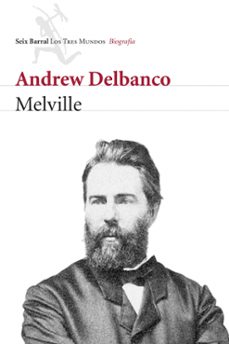
"Una espléndida biografía del mejor novelista americano, la mejor que se ha escrito." The Independent. Con Moby Dick, Herman Melville sentó las bases de la Gran Novela Americana, y con Bartleby el escribiente, Benito Cereno y Billy Budd consolido una de las obras mas importantes de la historia de la literatura. Aclamado por la revista Time como "el mejor critico social estadounidense", Andrew Delbanco construye una accesible biografia muy amena, al estilo anglosajon, que ilumina los interrogantes que rodean la figura de este gran autor y proporciona nuevas sorprendentes visiones sobre Melville y su obra.