How did we learn to hate or despise? Simply, because we were taught to. In 638 the Christian Patriarch of the Holy city of Jerusalem called the Muslim Caliph's presence an abomination in the sight of God. Christians and Muslims have since regarded each other warily and have silently thought of each other as 'infidels.' This book traces the long history of this troubled relationship. It was a campaign without end, waged with the pen, through the printing press, by the power of the human voice and on subtle and insidious suggestions in paintings, drawings and engravings. In this brilliant book we see how and why the battle is still being waged today, through the press, books, television, radio and the internet.
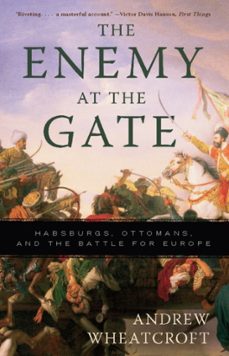
In 1683, an Ottoman army that stretched from horizon to horizon set out to seize the "Golden Apple," as Turks referred to Vienna. The ensuing siege pitted battle-hardened Janissaries wielding seventeenth-century grenades against Habsburg armies, widely feared for their savagery. The walls of Vienna bristled with guns as the besieging Ottoman host launched bombs, fired cannons, and showered the populace with arrows during the battle for Christianitys bulwark. Each side was sustained by the hatred of its age-old enemy, certain that victory would be won by the grace of God.The Great Siege of Vienna is the centerpiece for historian Andrew Wheatcrofts richly drawn portrait of the centuries-long rivalry between the Ottoman and Habsburg empires for control of the European continent. A gripping work by a master historian, The Enemy at the Gate offers a timely examination of an epic clash of civilizations.
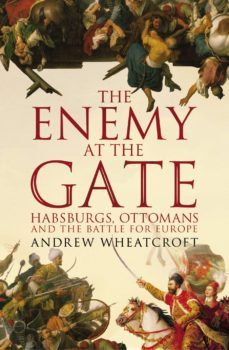
In 1683, two empires - the Ottoman, based in Constantinople, and the Habsburg dynasty in Vienna - came face to face in the culmination of a 250-year power struggle: the Great Siege of Vienna. Within the city walls the choice of resistance over surrender to the largest army ever assembled by the Turks created an all-or-nothing scenario: every last survivor would be enslaved or ruthlessly slaughtered. The Turks had set their sights on taking Vienna, the city they had long called The Golden Apple since their first siege of the city in 1529. Both sides remained resolute, sustained by hatred of their age-old enemy, certain that their victory would be won by the grace of God.Eastern invaders had always threatened the West: Huns, Mongols, Goths, Visigoths, Vandals and many others. The Western fears of the East were vivid and powerful and, in their new eyes, the Turks always appeared the sole aggressors. Andrew Wheatcrofts extraordinary book shows that this belief is a grievous oversimplification: during the 400 year struggle for domination, the West took the offensive just as often as the East. As modern Turkey seeks to re-orient its relationship with Europe, a new generation of politicians is exploiting the residual fears and tensions between East and West to hamper this change. The Enemy at the Gate provides a timely and masterful account of this most complex and epic of conflicts.
Hailed on publication as a thought-provoking, authoritative analysis of the true beginnings of the Second World War, this revised edition of The Road to War is essential reading for anyone interested in this momentous period of history. Taking each major nation in turn, the book tells the story of their road to war; recapturing the concerns, anxieties and prejudices of the statesmen of the thirties.