Carrie Gibson es la autora del aclamado Empire’s Crossroads: A History of the Caribbean from Columbus to the Present Day. Recibió el doctorado en la Universidad de Cambridge por un trabajo centrado en las Indias Occidentales españolas en tiempos de la Revolución haitiana. Ha trabajado como periodista en The Guardian y como colaboradora para otras publicaciones además de la BBC. Su investigación la ha llevado a México, el Caribe y los Estados Unidos. Reside en Londres.
Recibe novedades de Carrie Gibson directamente en tu email

«Esto es Historia en forma de diálogo, que prescinde de la autoridad doliente de los archivos y adopta la forma de una larga conversación, desde la premisa de que se puede alcanzar la verdad mediante
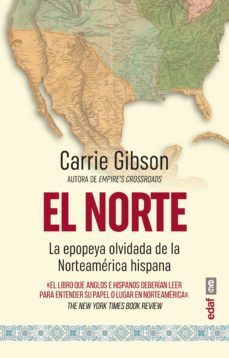
Durante mucho tiempo, los Estados Unidos se han preciado de su herencia anglosajona por encima de todas las demás. No obstante, tal como Carrie Gibson explica en El Norte con gran profundidad y nitidez, la nacion tiene unas raices hispanas mucho mas antiguas, las cuales han permanecido largo tiempo ignoradas y marginalizadas. Su pasado hispanico precede en mas de un siglo a la llegada del Mayflower, y es de todo punto igual de importante a la hora de dar forma a la nacion tal como existe hoy en dia. El Norte es una cronica de la extensa y dramatica historia de la Norteamerica hispana, desde el desembarco inicial de Ponce de Leon en Florida en 1513, pasando por la toma de control del vasto territorio de la Luisiana por parte de España en 1762 o la guerra mexicano-estadounidense de 1846, hasta llegar a la reciente tragedia de Puerto Rico tras el huracan Maria, o la persistente tension fronteriza con Mexico. Entretejidos en esta emotiva narracion se encuentran los dilemas culturales que han estado presentes desde el principio y que aun siguen sin resolverse: idioma, pertenencia, raza y nacionalidad. Contemplar la evolucion de estas cuestiones a lo largo de los siglos proporciona una perspectiva vital en un tiempo en que esta resulta sumamente necesaria. Una importante correccion a siglos de historia estadounidense. THE GUARDIAN.
For reasons of language and history, the United States has prized its Anglo heritage above all others. However, as Carrie Gibson explains with great depth and clarity in El Norte, America has much older Spanish roots - ones that have long been unacknowledged or marginalized. The Hispanic past of the United States predates the arrival of the Pilgrims by a century and has been every bit as important in shaping the nation.El Norte chronicles the sweeping and dramatic history of Hispanic North America from the arrival of the Spanish to the present - from Ponce de Leons initial landing in Florida in 1513 to Spanish control of the vast Louisiana territory in 1762 to the Mexican-American War in 1846 and up to the more recent tragedy of post-hurricane Puerto Rico and the ongoing border acrimony with Mexico. Interwoven in this stirring narrative of events and people are cultural issues that have been there from the start and remain unresolved: language, belonging, community, race and nationality. Seeing them play out over centuries provides vital perspective at a time when it is urgently needed.In 1883, Walt Whitman wrote to that composite American identity of the future, Spanish character will supply some of the most needed parts. That future is here, and El Norte, an emotive and eventful history in its own right, will have a powerful impact on our perception of the United States.
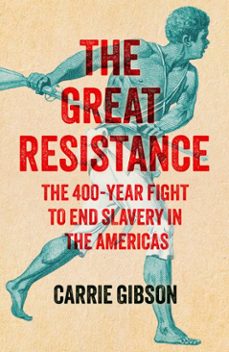
The history of the most diverse insurrection the world has ever known. For more than four centuries, enslaved people across the western hemisphere, from the United States and the Caribbean to Mexico and Brazil, fought any way they could to gain their freedom: from the first African revolt in 1521 on the island of Hispaniola to the eighteenth-century Maroon Wars on Jamaica, and the revolution that gave Haiti its independence. In The Great Resistance, acclaimed historian Carrie Gibson recovers their dramatic stories in one sweeping narrative. Focusing on the thousands of acts of defiance that kept the flame of freedom alive, Gibson vividly chronicles the resistance that eventually ended the slave trade and, with Brazils abolition in 1888, the institution of slavery itself.Intertwined with this quest for emancipation were the political revolutions that gave rise to the modern nation-state. At a time when all post-slavery societies face serious questions about social and racial inequality, Gibson provides a radical new interpretation of abolition set amid a sweeping global landscape.With its deep scholarship and rich narrative, The Great Resistance is a tribute to the persistence of the human spirit to overcome even the darkest of circumstances.
In Empires Crossroads, Carrie Gibson offers readers a vivid, authoritative and action-packed history of the Caribbean. For Gibson, everything was created in the West Indies: the Europe of today, its financial foundations built with sugar money: the factories and mills built as a result of the work of slaves thousands of miles away; the idea of true equality as espoused in Saint Domingue in the 1790s; the slow progress to independence; and even globalization and migration, with the ships passing to and fro taking people and goods in all possible directions, hundreds of years before the term globalization was coined. From Cuba to Haiti, from Dominica to Martinique, from Jamaica to Trinidad, the story of the Caribbean is not simply the story of slaves and masters - but of fortune-seekers and pirates, scientists and servants, travellers and tourists. It is not only a story of imperial expansion - European and American - but of global connections, and also of life as it is lived in the islands, both in the past and today.