DAVID MARSH (1952) analista de economía y finanzas especializado en el contexto europeo. Estudió Química en la Universidad de Oxford, pero en 1973 se inclinó hacia el periodismo y entró a trabajar en la agencia Reuters. Entre 1978 y 1995 trabajó en el Financial Times, llegó a ser el responsable de la zona europea. Cofundador y presidente del Official Monetary and Financial Institutions Forum (OMFIF), ha trabajado en el periódico financiero Handelsblatt y en diversas entidades de la City londinense, y ha escrito varios libros centrados en analizar diferentes aspectos de la economía en Europa, como El Bundesbank (1992) y The Euro: The Politics of the New Global Currency (1994).
Recibe novedades de David Marsh directamente en tu email

For Who the Bell Tolls is a book that explains the grammar that people really need to know, such as the fact that an apostrophe is the difference between a company that knows its s*** and a company that knows its s***, or the importance of capital letters to avoid ambiguity in such sentences as I helped my Uncle Jack off his horse.David Marshs lifelong mission has been to create order out of chaos. For four decades, he has worked for newspapers, from the Sun to the Financial Times, from local weeklies that sold a few thousand copies to the Guardian, with its global readership of nine million, turning the sows ear of rough-and-ready reportage into a passable imitation of a silk purse.The chaos might be sloppy syntax, a disregard for grammar or a fundamental misunderstanding of what grammar is. It could be an adherence to rules that have no real basis and get in the way of fluent, unambiguous communication at the expense of ones that are actually useful. Clear, honest use of English has many enemies: politicians, business and marketing people, local authority and civil service jargonauts, rail companies, estate agents, academics . . . and some journalists. This is the book to help defeat them. A splendid and, more importantly, sane book on English grammar. Mark Forsyth, author of The Etymologicon
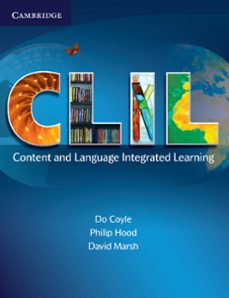
CLIL (Content and Language Integrated Learning) has emerged since the millennium as a major trend in education. Written by Do Coyle, Philip Hood and David Marsh and drawing on their experience of CLIL in secondary schools, primary schools and English language schools across Europe, this book gives a comprehensive overview of CLIL. It summarises the theory which underpins the teaching of a content subject through another language and discusses its practical application, outlining the key directions for the development of research and practice. This book acknowledges the uncertainty many teachers feel about CLIL, because of the requirement for both language and subject knowledge, while providing theoretical and practical routes towards successful practice for all.
T eoría y métodos de la ciencia política reúne un conjunto de artículos a cargo de autores de renombre de la politología. Los editores, David Marsh y Gerry Stoker, han conseguido presentar esta disciplina de forma rigurosa y, al mismo tiempo, accesible. La presente obra recoge, con dinamismo y amplitud de miras, la transformacion que han experimentado los enfoques tradicionales de la ciencia politica para adaptarse a las criticas y reflexiones de las nuevas generaciones de politologos. Asimismo, el libro incorpora una rica variedad de metodos (cuantitativos y cualitativos) y teorias, abriendose a la colaboracion con otras areas de conocimiento afines. El rasgo clave de este trabajo es, por tanto, su gran actualidad y abundante bibliografia. Su lectura resulta asi imprescindible tanto para el estudiante como para el profesor de ciencia politica.
La cohesión y el liderazgo que Europa pretendía lograr con la unificación monetaria hoy están muy lejos de alcanzarse. Las tensiones dentro de la Unión Económica y Monetaria son patentes y el distanciamiento de sus miembros cada vez mayor. David Marsh sintetiza en esta obra el escenario en el que se han movido hasta ahora los paises de la eurozona, señala de forma implacable los errores que se han cometido, propone medidas para el fortalecimiento de la Union Europea y advierte de los serios peligros que supone no implementar soluciones concretas y radicales para resolver una crisis que puede prolongarse de forma indefinida.