Fusing theory with advice and information about the practicalities of translating, Becoming a Translator is the essential resource for novice and practicing translators. The book explains how the market works, helps translators learn how to translate faster and more accurately, as well as providing invaluable advice and tips about how to deal with potential problems, such as stress. The third edition has been revised and updated throughout, offering: extensive up-to-date information about new translation technologies discussions of the emerging "sociological" and "activist" turns in translation studies new exercises and examples updated further reading sections a website containing a teachers guide, the chapter The Translator as Learner and additional resources for translators Offering suggestions for discussion, activities, and hints for the teaching of translation, the third edition of Becoming a Translator remains invaluable for students and teachers of Translation Studies, as well as those working in the field of translation.
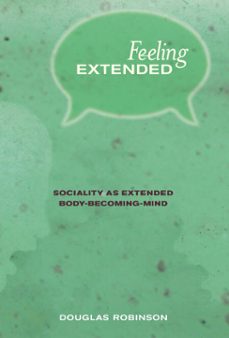
A new view of the extended mind thesis argues that a stark binary opposition between really extending and seeming to extend oversimplifies the issue.The extended-mind thesis (EMT), usually attributed to Andy Clark and David Chalmers, proposes that in specific kinds of mind-body-world interaction there emerges an extended cognitive system incorporating such extracranial supports as pencils, papers, computers, and other objects and environments in the world. In Feeling Extended, Douglas Robinson accepts the thesis, but argues that the usual debate over EMTwhich centers on whether mind really (literally, actually, materially) extends to body and world or only seems tooversimplifies the issue. When we say that mind feels as if it extends, Robinson argues, what extends is precisely feelingand mind, insofar as it arises out of feeling.Robinson explores the world of affect and conation as intermediate realms of being between the physical movements of body and the qualitative movements of mind. He shows that affect is transcranial and tends to become interpersonal conation. Affective-becoming-conative sociality, he argues, is in fact the primary area in which body-becoming-mind extends. To make his case, Robinson draws on a wide spectrum of philosophical thoughtfrom the EMT and qualia debates among cognitivists to the prehistory of such debates in the work of Hegel and Peirce to continental challenges to Hegelianism from Bakhtin and Derridaas well as on extensive empirical research in social psychology and important sociological theories of face (Goffman), ritual (Connerton), and habitus (Bourdieu).
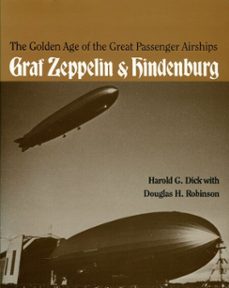
Drawing on the extensive photographs, notes, diaries, reports, recorded data, and manuals he collected during his five years at the Zeppelin Company in Germany, from 1934 through 1938, Harold G. Dick tells the story of the two great passenger Zeppelins. Against the background of German secretiveness, especially during the Nazi period, Dicks accumulation of material and pictures is extraordinary. His original photographs and detailed observations on the handling and flying of the two big rigids constitute the essential data on this phase of aviation history.