Edward Slingerland es un sinólogo y filósofo canadiense-estadounidense. Estudió en Princeton, Stanford y Berkeley. Es académico universitario distinguido y profesor de filosofía en la Universidad de Columbia Británica, donde también ostenta cargos en los departamentos de Psicología y Estudios Asiáticos. Ha publicado numerosos libros y artículos especializados en revistas académicas, además de participar en la edición de distintos monográficos de psicología, ciencia cognitiva o estudios sobre religión. Es un firme defensor del diálogo y la integración entre las ciencias y las humanidades. Sus amplios intereses de investigación incluyen el pensamiento chino antiguo, la religión comparada y la ciencia cognitiva de la religión, los enfoques de big data para el análisis cultural, la lingüística cognitiva, la evolución cultural, la psicología moral y las humanidades digitales.
Recibe novedades de Edward Slingerland directamente en tu email

Aunque se han escrito ríos de tinta sobre la historia y la filosofía del alcohol y otras drogas, nadie había ofrecido hasta ahora una respuesta completa y convincente a la pregunta básica detrás del fenomeno: ¿por que los seres humanos han recurrido desde siempre a sustancias alteradoras de la conciencia?Borrachos, un trabajo titanico de erudicion interdisciplinar, trae una sorprendente respuesta a esta cuestion. A partir de la evidencia de la arqueologia, la historia, la neurociencia cognitiva, la psicofarmacologia, la psicologia social, la literatura y la genetica, el investigador Edward Slingerland demuestra que nuestro gusto por los intoxicantes quimicos no es un error evolutivo, como a menudo se nos dice.De hecho, la intoxicacion ayuda a resolver una serie de desafios caracteristicos de los humanos: mejorar la creatividad, aliviar el estres, generar confianza y conseguir el milagro de que los primates ferozmente tribales cooperen con extraños.El lector castellanohablante por fin tiene a su alcance esta obra magna, una investigacion que no solo explica por que queremos emborracharnos. Slingerland tambien muestra que, de vez en cuando, puede ser interesante agarrarse una buena cogorza
An "entertaining and enlightening" deep dive into the alcohol-soaked origins of civilizationand the evolutionary roots of humanitys appetite for intoxication (Daniel E. Lieberman, author of Exercised).While plenty of entertaining books have been written about the history of alcohol and other intoxicants, none have offered a comprehensive, convincing answer to the basic question of why humans want to get high in the first place.Drunk elegantly cuts through the tangle of urban legends and anecdotal impressions that surround our notions of intoxication to provide the first rigorous, scientifically-grounded explanation for our love of alcohol. Drawing on evidence from archaeology, history, cognitive neuroscience, psychopharmacology, social psychology, literature, and genetics, Drunk shows that our taste for chemical intoxicants is not an evolutionary mistake, as we are so often told. In fact, intoxication helps solve a number of distinctively human challenges: enhancing creativity, alleviating stress, building trust, and pulling off the miracle of getting fiercely tribal primates to cooperate with strangers. Our desire to get drunk, along with the individual and social benefits provided by drunkenness, played a crucial role in sparking the rise of the first large-scale societies. We would not have civilization without intoxication.From marauding Vikings and bacchanalian orgies to sex-starved fruit flies, blind cave fish, and problem-solving crows, Drunk is packed with fascinating case studies and engaging science, as well as practical takeaways for individuals and communities. The result is a captivating and long overdue investigation into humanitys oldest indulgenceone that explains not only why we want to get drunk, but also how it might actually be good for us to tie one on now and then.
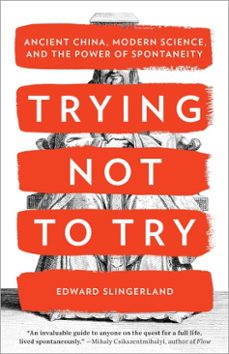
A Guardian Best Book of 2014 A 2014 Brain Pickings Best Book on Psychology Philosophy and How to Live Meaningfully Why is it hard to fall asleep the night before an important meeting Or be charming and relaxed on a first date What is it about a comedian whose jokes fall flat or an athlete who chokes What if contrary to what we have long been told spontaneity not striving is the answer to success Through stories of mythical creatures and drunken cart riders jazz musicians and Japanese motorcycle gangs Slingerland effortlessly blends Eastern thought and cutting edge science to show us how we can embody a spontaneous way of being and live more fulfilling lives
A deeply original exploration of the power of spontaneityan ancient Chinese ideal that cognitive scientists are only now beginning to understandand why it is so essential to our well-being Why is it always hard to fall asleep the night before an important meeting? Or be charming and relaxed on a first date? What is it about a politician who seems wooden or a comedian whose jokes fall flat or an athlete who chokes? In all of these cases, striving seems to backfire. In Trying Not To Try, Edward Slingerland explains why we find spontaneity so elusive, and shows how early Chinese thought points the way to happier, more authentic lives. Weve long been told that the way to achieve our goals is through careful reasoning and conscious effort. But recent research suggests that many aspects of a satisfying life, like happiness and spontaneity, are best pursued indirectly. The early Chinese philosophers knew this, and they wrote extensively about an effortless way of being in the world, which they called wu-wei (ooo-way). They believed it was the source of all success in life, and they developed various strategies for getting it and hanging on to it. With clarity and wit, Slingerland introduces us to these thinkers and the marvelous characters in their texts, from the butcher whose blade glides effortlessly through an ox to the wood carver who sees his sculpture simply emerge from a solid block. Slingerland uncovers a direct line from wu-wei to the Force in Star Wars, explains why wu-wei is more powerful than flow, and tells us what it all means for getting a date. He also shows how new research reveals whats happening in the brain when were in a state of wu-weiwhy it makes us happy and effective and trustworthy, and how it might have even made civilization possible. Through stories of mythical creatures and drunken cart riders, jazz musicians and Japanese motorcycle gangs, Slingerland effortlessly blends Eastern thought and cutting-edge science to show us how we can live more fulfilling lives. Trying Not To Try is mind-expanding and deeply pleasurable, the perfect antidote to our striving modern culture.
Aunque se han escrito ríos de tinta sobre la historia y la filosofía del alcohol y otras drogas, nadie había ofrecido hasta ahora una respuesta completa y convincente a la pregunta básica detrás del fenomeno: ¿por que los seres humanos han recurrido desde siempre a sustancias alteradoras de la conciencia?Borrachos, un trabajo titanico de erudicion interdisciplinar, trae una sorprendente respuesta a esta cuestion. A partir de la evidencia de la arqueologia, la historia, la neurociencia cognitiva, la psicofarmacologia, la psicologia social, la literatura y la genetica, el investigador Edward Slingerland demuestra que nuestro gusto por los intoxicantes quimicos no es un error evolutivo, como a menudo se nos dice.De hecho, la intoxicacion ayuda a resolver una serie de desafios caracteristicos de los humanos: mejorar la creatividad, aliviar el estres, generar confianza y conseguir el milagro de que los primates ferozmente tribales cooperen con extraños.El lector castellanohablante por fin tiene a su alcance esta obra magna, una investigacion que no solo explica por que queremos emborracharnos. Slingerland tambien muestra que, de vez en cuando, puede ser interesante agarrarse una buena cogorza