Es titular de la Cátedra de Seguridad Industrial en la École de Mines de París, profesor visitante de la Norwegian University of Science and Technology (NTNU –Trondheim), y Catedrático Emérito en el Departamento de Computación y Ciencia de la Información de la University of Linköping (Suecia), donde fue Catedrático de Interacción Hombre-Máquina.
Recibe novedades de ERIK HOLLNAGEL directamente en tu email

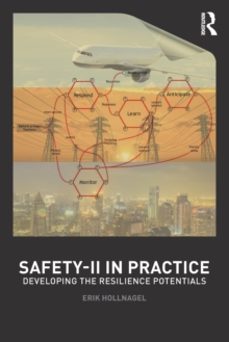
Safety I is defined as the freedom from unacceptable harm The purpose of traditional safety management is therefore to find ways to ensure this freedom But as socio technical systems steadily have become larger and less tractable this has become harder to do Resilience engineering pointed out from the very beginning that resilient performance an organisation s ability to function as required under expected and unexpected conditions alike required more than the prevention of incidents and accidents This developed into a new interpretation of safety Safety II and consequently a new form of safety management Safety II changes safety management from protective safety and a focus on how things can go wrong to productive safety and a focus on how things can and do go well For Safety II the aim is not just the elimination of hazards and the prevention of failures and malfunctions but also how best to develop an organisation s potentials for resilient performance the way it responds monitors learns and anticipates That requires models and methods that go beyond the Safety I toolbox This book introduces a comprehensive approach for the management of Safety II called the Resilience Assessment Grid RAG It explains the principles of the RAG and how it c
This book promotes an understanding of the purposeful muddling that health care workers rely on to be better able to function and operate in the multitude of complex ecosystems we call health care The book argues the case for the importance of recognising and understanding muddling behaviours practices and activities in order to create resilient care The book demonstrates how resilient health care principles can enable managers as well as those on the frontlines to work more effectively towards interdisciplinary care by gaining a deeper understanding of real world practices that manifest in everyday clinical settings This is done by presenting a set of case studies theoretical chapters and applications that relate experiences bring forth ideas and illustrate practical solutions Primarily aimed at people who are directly involved in the running and improvement of health care systems it provides practical guidance It is also of direct interest to health care professionals in clinical and managerial positions as well as researchers Jeffrey Braithwaite is Founding Director of the Australian Institute of Health Innovation Professor of Health Systems Research and Director of the Centre for Healthcare Resilience and Implementation Science Macquarie University A
Espoleado por los resultados de investigaciones que ha desarrollado en distintos campos (aviación, producción de energía, seguridad aérea, sector sanitario), Erik Hollnagel ha puesto a punto metodologias preventivas con una clara vocacion practica. A diferencia de otros libros, el objetivo de este trabajo es mas la prevencion de accidentes que el analisis de accidentes, desde un enfoque mas proactivo que reactivo. Escrito de forma accesible y clara, este libro es una guia estimulante y practica dirigida a todos los actores interesados o afectados por la prevencion y la seguridad: analistas de accidentes, inspectores de trabajo, directivos y tecnicos de seguridad industrial y prevencion de riesgos, consultores y empresas especializadas en seguridad y riesgo, profesionales del Factor Humano. Traduccion de Gema Fernandez Sampedro
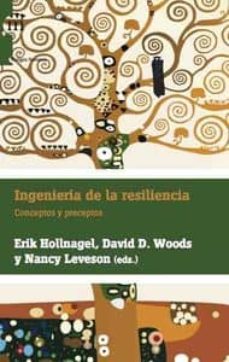
En la ingeniería de la resiliencia el fallo es la otra cara de las adaptaciones necesarias para hacer frente a la complejidad del mundo real, más que unaanomalía o disfunción como tal. La actuación de los individuos y las organizaciones debe adaptarse en cualquier momento al contexto y, puesto que los recursos y el tiempo son limitados, dichas adaptaciones son siempre aproximadas. El éxito ha sido adscrito a la habilidad de las organizaciones, grupos e individuos para anticiparse a las formas cambiantes que adopta el riesgo antes de que se produzcan los fallos y el daño. El fallo es simplemente la ausencia, temporal o permanente, de esa habilidad. La seguridad es algo que el sistema hace y no tanto algo que el sistema tiene. No es suficiente que los sistemas sean fiables: deben tener además resiliencia y la habilidad para recuperarse de las perturbaciones. La ingeniería de la resiliencia aborda la necesidad de desarrollar sistemas que impidan activamente que se pierda el control.