Butler University in Indianapolis became the smallest school in 40 years to reach the NCAA championship game. Prior to the tournament, a statistician calculated the Bulldogs as a 200-to-1 shot to win. But as fascinating as what Butler accomplished was how they did it. Underdawgs tells the incredible and uplifting story. Butlers coach, 33-year-old Brad Stevens, looked so young he was often mistaken for one of the players, but he had quickly become one of the best coaches in the nation by employing the Butler Way. This philosophy of basketball and life, adopted by former coach Barry Collier, is based on five principles: humility, passion, unity, servanthood, and thankfulness. Even the most casual observer could see this in every player, on the court and off, from NBA first-round draft pick Gordon Hayward to the last guy on the bench. Butler was coming off a great 200910 regular season, but its longtime existence on the periphery of major college basketball fostered doubt as March Madness set in. But after two historic upsets, one of top-seeded Syracuse and another of second-seeded Kansas State, and making it to the Final Four, the Bulldogs came within the diameter of a shoelace of beating the perennial leaders of college basketball: the Duke Blue Devils. Much more than a sports story, Underdawgs is the consummate David versus Goliath tale. Despite Dukes winning the championship, the Bulldogs proved they belonged in the game and, in the process, won the respect of people who were not even sports fans.
Cómo mejorar los centros docentes" ofrece una visión práctica de las mejoras que se pueden llevar a cabo en cualquier centro educativo. Deja a un lado la jerga de los especialistas y aporta consejos utiles. Muestra como se pueden cambiar las ideas e intenciones por acciones directas que ayudaran al centro educativo a mejorar su rendimiento y eficacia. Esta dirigido tanto a directores como a miembros del Consejo Escolar es una guia de incalculable valor para los que trabajan en y con los centros. Algunos de los temas tratados son: - Centros educativos que funcionan y como han conseguido sus objetivos -Autoridad dentro de los centros -Realizacion de intervenciones criticas para asegurar la mejora -Enseñanza y aprendizaje eficaz -Como los centros implican a otros para ayudar a la mejora.
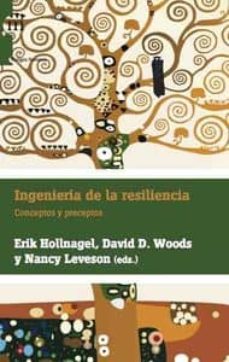
En la ingeniería de la resiliencia el fallo es la otra cara de las adaptaciones necesarias para hacer frente a la complejidad del mundo real, más que unaanomalía o disfunción como tal. La actuación de los individuos y las organizaciones debe adaptarse en cualquier momento al contexto y, puesto que los recursos y el tiempo son limitados, dichas adaptaciones son siempre aproximadas. El éxito ha sido adscrito a la habilidad de las organizaciones, grupos e individuos para anticiparse a las formas cambiantes que adopta el riesgo antes de que se produzcan los fallos y el daño. El fallo es simplemente la ausencia, temporal o permanente, de esa habilidad. La seguridad es algo que el sistema hace y no tanto algo que el sistema tiene. No es suficiente que los sistemas sean fiables: deben tener además resiliencia y la habilidad para recuperarse de las perturbaciones. La ingeniería de la resiliencia aborda la necesidad de desarrollar sistemas que impidan activamente que se pierda el control.