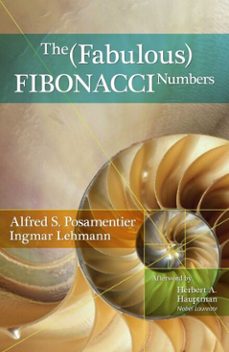
What exactly is the Golden Ratio? How was it discovered? Where is it found? These questions and more are thoroughly explained in this engaging tour of one of mathematics most interesting phenomena. The authors trace the appearance of the Golden Ratio throughout history, demonstrate a variety of ingenious techniques used to construct it, and illustrate the many surprising geometric figures in which the Golden Ratio is embedded. Requiring no more than an elementary knowledge of geometry and algebra, the authors give readers a new appreciation of the indispensable qualities and inherent beauty of mathematics.
Requiring no more than a knowledge of high school mathematics and written in clear and accessible language, this book will give all readers a new insight into some of the most enjoyable and fascinating aspects of geometry. Everyone knows what a triangle is, yet very few people appreciate that the common three-sided figure holds many intriguing "secrets." For example, if a circle is inscribed in any random triangle and then three lines are drawn from the three points of tangency to the opposite vertices of the triangle, these lines will always meet at a common point-no matter what the shape of the triangle. This and many more interesting geometrical properties are revealed in this entertaining and illuminating book about geometry. Flying in the face of the common impression that mathematics is usually dry and intimidating, this book proves that this sometimes-daunting, abstract discipline can be both fun and intellectually stimulating. The authors, two veteran math educators, explore the multitude of surprising relationships connected with triangles and show some clever approaches to constructing triangles using a straightedge and a compass. Readers will learn how they can improve their problem-solving skills by performing these triangle constructions. The lines, points, and circles related to triangles harbor countless surprising relationships that are presented here in a very engaging fashion.
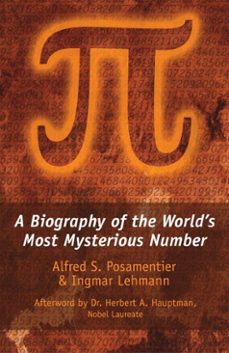
In this delightful laypersons introduction to one of maths most interesting phenomena, Drs. Posamentier and Lehmann review pis history from prebiblical times to the 21st century, the many amusing and mind-boggling ways of estimating pi over the centuries, quirky examples of obsessing about pi, and useful applications of pi in everyday life, including statistics.
An innovative and appealing way for the layperson to develop math skillswhile actually enjoying it Most people agree that math is important, but few would say its fun. This book will show you that the subject you learned to hate in high school can be as entertaining as a witty remark, as engrossing as the mystery novel you cant put downin short, fun! As veteran math educators Posamentier and Lehmann demonstrate, when you realize that doing math can be enjoyable, you open a door into a world of unexpected insights while learning an important skill. The authors illustrate the point with many easily understandable examples. One of these is what mathematicians call the "Ruth-Aaron pair" (714 and 715), named after the respective career home runs of Babe Ruth and Hank Aaron. These two consecutive integers contain a host of interesting features, one of which is that their prime factors when added together have the same sum. The authors also explore the unusual aspects of such numbers as 11 and 18, which have intriguing properties usually overlooked by standard math curriculums. And to make you a better all-around problem solver, a variety of problems is presented that appear simple but have surprisingly clever solutions. If math has frustrated you over the years, this delightful approach will teach you many things you thought were beyond your reach, while conveying the key message that math can and should be anything but boring.
Two veteran math educators demonstrate how some "magnificent mistakes" had profound consequences for our understanding of mathematics key concepts. In the nineteenth century, English mathematician William Shanks spent fifteen years calculating the value of pi, setting a record for the number of decimal places. Later, his calculation was reproduced using large wooden numerals to decorate the cupola of a hall in the Palais de la Decouverte in Paris. However, in 1946, with the aid of a mechanical desk calculator that ran for seventy hours, it was discovered that there was a mistake in the 528th decimal place. Today, supercomputers have determined the value of pi to trillions of decimal places. This is just one of the amusing and intriguing stories about mistakes in mathematics in this laypersons guide to mathematical principles. In another example, the authors show that when we "prove" that every triangle is isosceles, we are violating a concept not even known to Euclid - that of "betweenness." And if we disregard the time-honored Pythagorean theorem, this is a misuse of the concept of infinity. Even using correct procedures can sometimes lead to absurd - but enlightening - results. Requiring no more than high-school-level math competency, this playful excursion through the nuances of math will give you a better grasp of this fundamental, all-important science.
El número Pi reina en un mundo de misterio, ¿Que ha fascinado el valor real de Pi? ¿Cómo determinan los matemáticos el valor de Pi? ¿Cómo se utiliza Pi? ¿Cómo se calculaba Pi antaño? Su esquiva naturaleza ha conducido a los investigadores con el paso de los años a aproximaciones cada vez mas exactas. Este ubicuo numero aparece cuando menos te lo esperas, por ejemplo, en el calculo de probabilidades o en los estudios biblicos. Ademas, presentan algunos ejemplos peculiares de la obsesion con Pi durante siglos, incluido el intento por legislar su valor exacto e incluso una cancion sobre Pi, ademas de aplicaciones muy utiles de Pi en la vida cotidiana. Los matematicos denominan a Pi “numero trascendental” porque su curioso valor no puede ser calculado a traves de ninguna combinacion de sumas, restas, multiplicaciones, divisiones o raices cuadradas. Aun mas curioso, al margen del numero de decimales que se quieran calcular del valor de Pi, el decimal jamas se repite. En el año 2002, un profesor japones calculo con ayuda de un supercomputador el valor de Pi ¡con mil doscientos cuarenta mil millones de decimales!. Sin embargo, en esta ingente cadena de decimales no hay ninguna repeticion periodica. “Un libro esclarecedor sobre uno de los grandes misterios de