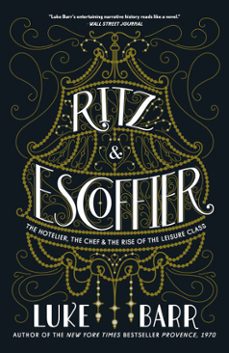
In a tale replete with scandal and opulence, Luke Barr, author of the New York Times bestselling Provence, 1970, transports readers to turn-of-the-century London and Paris to discover how celebrated hotelier Cesar Ritz and famed chef Auguste Escoffier joined forces at the Savoy Hotel to spawn the modern luxury hotel and restaurant, where women and American Jews mingled with British high society, signaling a new social order and the rise of the middle class.In early August 1889, Cesar Ritz, a Swiss hotelier highly regarded for his exquisite taste, found himself at the Savoy Hotel in London. He had come at the request of Richard D'Oyly Carte, the financier of Gilbert & Sullivan's comic operas, who had modernized theater and was now looking to create the world's best hotel. D'Oyly Carte soon seduced Ritz to move to London with his team, which included Auguste Escoffier, the chef de cuisine known for his elevated, original dishes. The result was a hotel and restaurant like no one had ever experienced, run in often mysterious and always extravagant ways--which created quite a scandal once exposed.Barr deftly re-creates the thrilling Belle Epoque era just before World War I, when British aristocracy was at its peak, women began dining out unaccompanied by men, and American nouveaux riches and gauche industrialists convened in London to show off their wealth. In their collaboration at the still celebrated Savoy Hotel, where they welcomed loyal and sometimes salacious clients, such as Oscar Wilde and Sarah Bernhardt, Escoffier created the modern kitchen brigade and codified French cuisine for the ages in his seminal Le Guide culinaire, which remains in print today, and Ritz, whose name continues to grace the finest hotels across the world, created the world's first luxury hotel. The pair also ruffled more than a few feathers in the process. Fine dining would never be the same--or more intriguing.
In a tale replete with scandal and opulence, Luke Barr, author of the New York Times bestselling Provence, 1970, transports readers to turn-of-the-century London and Paris to discover how celebrated hotelier Cesar Ritz and famed chef Auguste Escoffier joined forces at the Savoy Hotel to spawn the modern luxury hotel and restaurant, where women and American Jews mingled with British high society, signaling a new social order and the rise of the middle class.In early August 1889, Cesar Ritz, a Swiss hotelier highly regarded for his exquisite taste, found himself at the Savoy Hotel in London. He had come at the request of Richard DOyly Carte, the financier of Gilbert & Sullivans comic operas, who had modernized theater and was now looking to create the worlds best hotel. DOyly Carte soon seduced Ritz to move to London with his team, which included Auguste Escoffier, the chef de cuisine known for his elevated, original dishes. The result was a hotel and restaurant like no one had ever experienced, run in often mysterious and always extravagant ways--which created quite a scandal once exposed. Barr deftly re-creates the thrilling Belle Epoque era just before World War I, when British aristocracy was at its peak, women began dining out unaccompanied by men, and American nouveaux riches and gauche industrialists convened in London to show off their wealth. In their collaboration at the still celebrated Savoy Hotel, where they welcomed loyal and sometimes salacious clients, such as Oscar Wilde and Sarah Bernhardt, Escoffier created the modern kitchen brigade and codified French cuisine for the ages in his seminal Le Guide culinaire, which remains in print today, and Ritz, whose name continues to grace the finest hotels across the world, created the worlds first luxury hotel. The pair also ruffled more than a few feathers in the process. Fine dining would never be the same--or more intriguing.
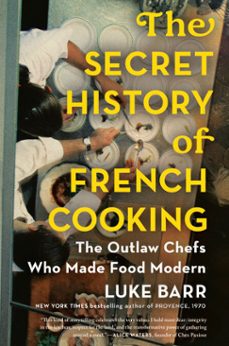
From the New York Times bestselling author of Provence, 1970, a lively, dramatic account of the rise of French nouvelle cuisine, and the renegade chefs of the 1960s and 70s who revolutionized modern cooking.In The Secret History of French Cooking, Luke Barr takes readers inside the culinary rebellion that upended the staid French food world and reinvented the role and cultural importance of chefs and restaurants. The very idea of the chef as creatoras innovator, artist, auteurcan be traced back to the legendary Paul Bocuse, Michel Guerard, and the Troisgros brothers, among other colorful characters. The techniques they pioneered-- fresh food, globally inspired ingredients, shorter cooking times, and avant-garde methods-- both shocked and inspired the restaurants of the day.The book also tells the largely unknown story of a group of women chefs, including Simone Lemaire, Christiane Massia, and Olympe Nahmias, who fought for recognition in the all-male culinary establishment of the 1970s, and the villainous, all-powerful food critic who cast a shadow over the era.This is a tale of rivalries, global success, and a ferocious backlash; of celebrity, money, politics, and incredibly delicious food. The Secret History of French Cooking reveals the origins of modern food and restaurant culturethe way we eat today.
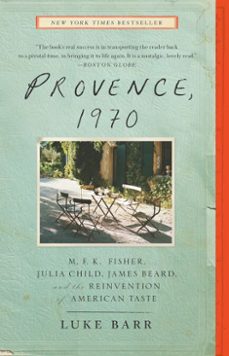
Provence, 1970 is about a singular historic moment. In the winter of that year, more or less coincidentally, the iconic culinary figures James Beard, M.F.K. Fisher, Julia Child, Richard Olney, Simone Beck, and Judith Jones found themselves together in the South of France. They cooked and ate, talked and argued, about the future of food in America, the meaning of taste, and the limits of snobbery. Without quite realizing it, they were shaping todays tastes and culture, the way we eat now. The conversations among this group were chronicled by M.F.K. Fisher in journals and letterssome of which were later discovered by Luke Barr, her great-nephew. In Provence, 1970, he captures this seminal season, set against a stunning backdrop in cinematic scopecomplete with gossip, drama, and contemporary relevance.
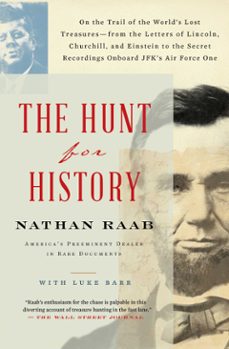
Nathan Raab, Americas preeminent rare documents dealer, delivers a diverting account of treasure hunting in the fast lane (The Wall Street Journal) that recounts his years as the Sherlock Holmes of historical artifacts, questing after precious finds and determining their authenticity.A box uncovered in a Maine attic with twenty letters written by Alexander Hamilton; a handheld address to Congress by President George Washington; a long-lost Gold Medal that belonged to an American President; a note that Winston Churchill wrote to his captor when he was a young POW in South Africa; paperwork signed and filled out by Amelia Earhart when she became the first woman to fly the Atlantic; an American flag carried to the moon and back by Neil Armstrong; an unpublished letter written by Albert Einstein, discussing his theory of relativity.Each day, people from all over the world contact Nathan Raab for help understanding what they have, what it might be worth, and how to sell it. The Raab Collections president, Nathan is a modern-day treasure hunter and one of the worlds most prominent dealers of historical artifacts. Most weeks, he travels the country, scours auctions, or fields phone calls and emails from people who think they may have found something of note in a grandparents attic.In The Hunt for History, Raab takes us on a wild hunt and deliciously opens up numerous hidden crevices of history (Jay Winik, author of April 1865)spotting a letter from British officials that secured the Rosetta Stone; discovering a piece of the first electric cable laid by Edison; restoring a fragmented letter from Andrew Jackson that led to the infamous Trail of Tears; and locating copies of missing audio that had been recorded on Air Force One as the plane brought JFKs body back to Washington. Whether its the first report of Napoleons death or an unpublished letter penned by Albert Einstein to a curious soldier, every document and artifact Raab uncovers comes with a spellbinding storyand often offers new insights into a life we thought we knew.