Sara Seager es astrofísica y profesora de Física y Ciencia Planetaria en el Instituto Tecnológico de Massachusetts (MIT). Su investigación, que la llevó a ganar una beca «a la genialidad» de la MacArthur Foundation en 2013, ha aportado muchas ideas fundacionales al campo de los exoplanetas. Ha dirigido el equipo de estudio «Probe» de la Nasa para el proyecto Starshade. Ahora se centra en la búsqueda de los primeros exoplanetas comparables a la Tierra y en indicios de vida en ellos. Vive con su marido, sus dos hijos y su perro en Concord, Massachusetts.
Recibe novedades de Sara Seager directamente en tu email
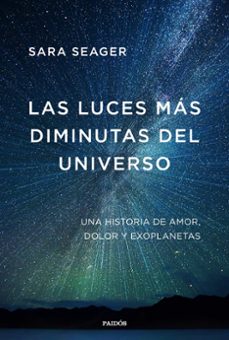
Sara Seager nos cuenta cómo tras la muerte de su marido tuvo que reinventarse a sí misma y descubrió el poder de la conexión en este planeta mientras intentaba hallar vida más allá de nuestra galaxia. Sara Seager siempre ha estado enamorada de las estrellas: tantas luces en el cielo, tantas posibilidades. Ahora, como cientifica planetaria pionera, busca exoplanetas, en especial mundos distantes y esquivos que alberguen vida. Pero con la muerte inesperada de su esposo, el proposito de su propia vida se le vuelve dificil de ver. De repente, a los cuarenta, se encuentra viuda y madre soltera de dos niños pequeños. Por primera vez, se siente sola en el universo. Mientras lucha por continuar su vida despues de su perdida, Seager se consuela con la belleza alienigena de los exoplanetas y los desafios tecnicos de la exploracion. Al mismo tiempo, descubre maravillosas conexiones en la Tierra cuando tanto extraños como seres queridos se acercan a ella a traves del espacio de su dolor. Lo mas inesperado de todo es que aparezca otro tipo de conexion, de esas que hay una en mil millones, y no en las estrellas, sino cerca de casa.Profundo y honesto, Las luces mas diminutas del universo es una luz en la oscuridad.

Sara Seager : la femme qui pourrait découvrir une autre Terre.Le récit dune quête spirituelle et intime, à la fois dans ce monde et bien au-delà...En tant quastrophysicienne spécialiste des exoplanèt
" SARA SEAGER, CELLE QUI POURRAIT BIEN DÉCOUVRIR UNE AUTRE TERRE. "The New York TimesProdige de lastrophysique, Sara Seager passe sa vie la tête dans les étoiles. Pas facile pour elle de garder les p
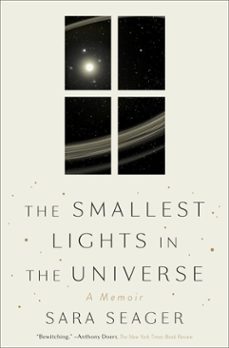
In The Smallest Lights in the Universe, MIT astrophysicist Sara Seager interweaves the story of her search for meaning and solace after losing her first husband to cancer, her unflagging search for an Earth-like exoplanet and her unexpected discovery of new love. Sara Seager has made it her lifes work to peer into the spaces around stars looking for exoplanets outside our solar system, hoping to find the one-in-a-billion world enough like ours to sustain life. But with the unexpected death of her husband, her life became an empty, lightless space. Suddenly, she was the single mother of two young boys, a widow at forty, clinging to three crumpled pages of instructions her husband had written for things like grocery shopping things he had done while she did pioneering work as a planetary scientist at MIT. She became painfully conscious of her Aspergers, which before losing her husband had felt more like background noise. She felt, for the first time, alone in the universe. In this probing, invigoratingly honest memoir, Seager tells the story of how, as she stumblingly navigated the world of grief, she also kept looking for other worlds. She continues to develop ground-breaking projects, such as the Starshade, a sunflower-shaped instrument that, when launched into space, unfurls itself so as to block planet-obscuring starlight, and she takes solace in the alien beauty of exoplanets. At the same time, she discovers what feels every bit as wondrous: other people, reaching out across the space of her grief. Among them are the Widows of Concord, a group of women offering consolation and advice, and her beloved sons, Max and Alex. Most unexpected of all, there is another kind of one-in-a-billion match with an amateur astronomer. Equally attuned to the wonders of deep space and human connection, The Smallest Lights in the Universe is its own light in the dark.
LOS ANGELES TIMES BOOK PRIZE WINNER An MIT astrophysicist reinvents herself in the wake of tragedy and discovers the power of connection on this planet, even as she searches our galaxy for another Earth, in thisbewitching (Anthony Doerr, The New York Times Book Review) memoir.Sara Seagers exploration of outer and inner space makes for a stunningly original memoir.Abraham Verghese, author of Cutting for StoneSara Seager has always been in love with the stars: so many lights in the sky, so much possibility. Now a pioneering planetary scientist, she searches for exoplanetsespecially that distant, elusive world that sustains life. But with the unexpected death of Seagers husband, the purpose of her own life becomes hard for her to see. Suddenly, at forty, she is a widow and the single mother of two young boys. For the first time, she feels alone in the universe.As she struggles to navigate her life after loss, Seager takes solace in the alien beauty of exoplanets and the technical challenges of exploration. At the same time, she discovers earthbound connections that feel every bit as wondrous, when strangers and loved ones alike reach out to her across the space of her grief. Among them are the Widows of Concord, a group of women offering advice on everything from home maintenance to dating, and her beloved sons, Max and Alex. Most unexpected of all, there is another kind of one-in-a-billion match, not in the stars but here at home.Probing and invigoratingly honest, The Smallest Lights in the Universe is its own kind of light in the dark.