For the first time, an award-winning Harvard professor shares his wildly popular course on classical Chinese philosophy, showing you how ancient ideaslike the fallacy of the authentic selfcan guide you on the path to a good life today.Why is a course on ancient Chinese philosophers one of the most popular at Harvard? Because it challenges all our modern assumptions about what it takes to flourish. Astonishing teachings emerged two thousand years ago through the work of a succession of Chinese scholars exploring how humans can improve themselves and their society. And what are these counterintuitive ideas? Transformation comes not from looking within for a true self, but from creating conditions that produce new possibilities. Good relationships come not from being sincere and authentic, but from the rituals we perform within them. A good life emerges not from planning it out, but through training ourselves to respond well to small moments. Influence comes not from wielding power but from holding back. Excellence comes from what we choose to do, not our natural abilities. In other words, The Path opens the mind (Huffington Post) and upends everything we are told about how to lead a good life. Its most radical idea is that there is no path to follow in the first placejust a journey we create anew at every moment by seeing and doing things differently. With itsspirited, convincing vision, revolutionary new insights can be gleaned from this book on how to approach lifes multifarious situations with both heart and head (Kirkus Reviews).
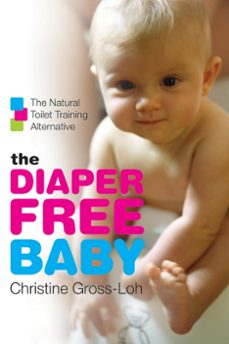
Imagine infants free from painful diaper rash, new parenthood without thousands of dollars wasted in diapering costs, toilet training that is natural and noncoercive, and, most important, happier babies and parentsAs Christine Gross-Loh reveals in her progressive, enlightening book, all this is possible and more. Infants are born with the ability to communicate their need to "go," just as they communicate hunger or sleepiness. Gross-Loh, a mother of two children who were diaper-free at eighteen and fifteen months, uses the tenets of "elimination communication," or EC, to teach parents how to identify and respond to their baby or toddlers natural cues. Unlike the all-or-nothing approach of some parenting books, The Diaper-Free Baby addresses three categories of parents: full-time, part-time, and occasional ECers. Parents can practice EC as much or as little as fits their family and lifestyle. A support group within a book, The Diaper-Free Baby also includes inspiring testimonials throughout every chapter. Parents who have successfully practiced EC identify common struggles, share experiences and problem-solving tips, and provide encouragement for those new to the technique. Their motivational stories together with Gross-Lohs practical advice will appeal to all parents interested in a fresh alternative to traditional toilet training.
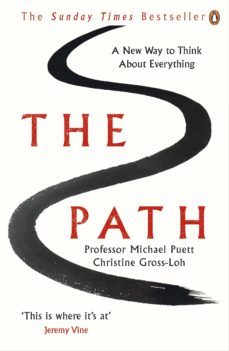
INTERNATIONAL BESTSELLERSUNDAY TIMES TOP TEN BESTSELLERHarvards most popular professor explains how thinkers from Confucius to Zhuangzi can transform our livesThe first book of its kind, The Path draws on the work of the great but largely unknown Chinese philosophers to offer a profound guide to living well. By explaining what these teachings reveal about subjects from decision-making to relationships, it challenges some of our deepest held assumptions, forcing us to "unlearn" many ideas that inform modern society. The way we think were living our lives isnt the way we live them.The authors show that we live well not by "finding" ourselves and slavishly following a grand plan, as so much of Western thought would have us believe, but rather through a path of self-cultivation and engagement with the world. Believing in a "true self" only restricts what we can become - and tiny changes, from how we think about careers to how we talk with our family, can start to have powerful effects that will open up constellations of new possibilities.Professor Michael Puetts course in Chinese philosophy has taken Harvard by storm. In The Path, he collaborates with journalist and author Christine Gross-Loh to make this timeless wisdom accessible to everyone for the very first time.
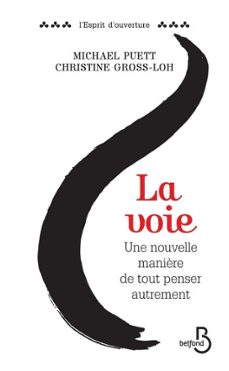
Comment mener une vie accomplie ? Comment trouver lamour ? Choisir la bonne carriere ? Quest-ce quetre vraiment heureux ? Toutes ces questions, nous ne cessons de nous les poser avec, toujours, cette impression de ne jamais obtenir de reponses satisfaisantes.Et si, pour mieux envisager lavenir, il nous fallait tout penser differemment ? Et si la solution cetait de revenir a la sagesse des anciens ? Cest ce que nous propose ici Michael Puett, professeur a Harvard et specialiste de la philosophie chinoise. Puisant dans les enseignements de Confucius, Mencius, Lao-tseu, Tchouang-tseu et Xunzi, il nous invite a nous defaire de nos certitudes, a nous ouvrir a de nouveaux horizons, afin de comprendre que lexistence nest pas a projeter comme un grand plan vertigineux mais a construire dinstant en instant pour trouver, enfin, sa propre voie. Une plongee salutaire dans une pensee millenaire qui va radicalement changer votre vie...
An eye-opening guide to the worlds best parenting strategiesResearch reveals that American kids lag behind in academic achievement, happiness, and wellness. Christine Gross-Loh exposes culturally determined norms we have about good parenting, and asks, Are there parenting strategies other countries are getting right that we are not? This book takes us across the globe and examines how parents successfully foster resilience, creativity, independence, and academic excellence in their children. Illuminating the surprising ways in which culture shapes our parenting practices, Gross-Loh offers objective, research-based insight such as: Co-sleeping may promote independence in kids. Hoverparenting can damage a childs resilience. Finnish children, who rank among the highest academic achievers, enjoy multiple recesses a day. Our obsession with self-esteem may limit a childs potential.
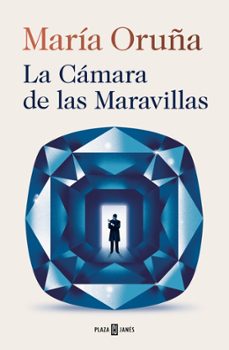

Todo lo que la filosofía china puede enseñarte para tener una vida mejor.«Si os tomáis en serio estas ideas, os cambiarán la vida». Michael Puett¿Por qué un curso de filosofía china clásica es de los