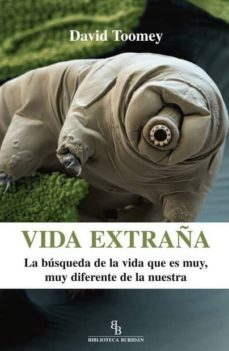
"Durante los años ochenta y noventa del siglo XX, en lugares en los que nadie pensaba que fuese posible la vida, los científicos descubrieron unos organismos a los que calificaron de extremófilos:
"In a virtual age when tempests are monitored by global positioning and The Weather Channel, Stormchasers reminds us that our first understanding of hurricanes was directly built on the risks and sacrifices of living, breathing heroes," writes Hampton Sides (author of Ghost Soldiers). In September 1955, Navy Lieutenant Commander Grover B. Windham and a crew of eight flew out of Guantanamo Bay into the eye of Hurricane Janet swirling in the Caribbean: a routine weather reconnaissance mission from which they never returned. In the wake of World War II, the Air Force and the Navy had discovered a new civilian arena where daring pilots could test their courage and skill. These Hurricane Hunters flew into raging storms to gauge their strength and predict their paths. Without computer, global positioning, or satellite support, they relied on rudimentary radar systems to locate the hurricane''s eye and estimated the drift of their aircraft by looking at windblown waves below. Drawing from Navy documents and interviews with members of the squadron and relatives of the crew, Stormchasers reconstructs the ill-fated mission of Windham''s crew from preflight checks to the chilling moment of their final transmission.
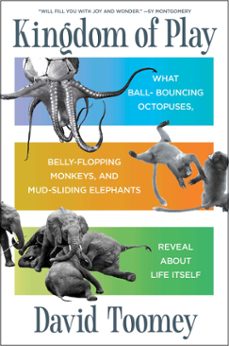
This delightfulcompelling (Scientific American) and revelatory look at the science behind why animals play will fill you with joy and wonder (Sy Montgomery, author of The Soul of an Octopus).Acclaimed science writer David Toomey takes us on a fast-paced and entertaining tour of playful animals and the scientists who study them. From octopuses on Australias Great Barrier Reef to meerkats in the Kalahari Desert to brown bears on Alaskas Aleutian Islands, we follow adventurous researchers as they design and conduct experiments seeking answers to new, intriguing questions: When did play first appear in animals? How does play develop the brain, and how did it evolve? Are the songs and aerial acrobatics of birds the beginning of avian culture? Is fairness in dog play the foundation of canine ethics? And does play direct and possibly accelerate evolution?Monkeys belly flop, dolphins tail-walk, elephants mud-slide, crows dive-bomb, and octopuses bounce balls. These activities are various, but all are play, and as Toomey explains, animal play can be defined as a distinct behavior that is ongoing and open-ended, purposeless and provisionalrather like natural selection. Through a close examination of both natural selection and play, Toomey argues that life itself is fundamentally playful.A lively, informative, and scientifically entertaining animal behavior study (KirkusReviews) Kingdom of Play is an illuminatingand yes, playfullook at a little-known aspect of the animal kingdom.