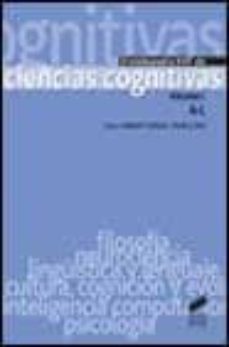
Desde hace una veintena de años, las ciencias cognitivas han contribuido a una comprensión multidisciplinar de la mente y la cognición. Actualmente existen programas y departamentos dedicados a las ciencias cognitivas y los estudios cognitivos en un importante número de instituciones internacionales. También existen importantes publicaciones sobre este área de investigación. Sin embargo, faltaba una obra de referencia que pudiera ser de utilidad para los investigadores que trabajan en las distintas tradiciones en toda la gama de campos relacionados con las ciencias cognitivas. La Enciclopedia MIT de Ciencias Cognitivas viene a llenar esta laguna. Es una obra pionera que abarca de manera comprensiva toda la diversidad metodológica y teorética de las ciencias cognitivas. La enciclopedia, de 1.500 páginas, contiene casi 500 entradas, cada una de las cuales ha sido redactada por un investigador especializado de renombre, y ofrece una introducción accesible a un concepto importante en las ciencias de la cognición. En cada entrada se ofrece también, para aquellas personas que quieran ampliar sus conocimientos en el tema, una lista de referencias y sugerencias bibliográficas para profundizar en la lectura.
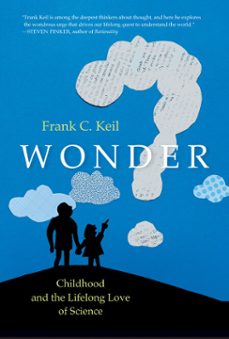
How we can all be lifelong wonderers: restoring the sense of joy in discovery we felt as children.From an early age, children pepper adults with questions that ask why and how: Why do balloons float? How do plants grow from seeds? Why do birds have feathers? Young children have a powerful drive to learn about their world, wanting to know not just what something is but also how it got to be that way and how it works. Most adults, on the other hand, have little curiosity about whys and hows; we might unlock a door, for example, or boil an egg, with no idea of what happens to make such a thing possible. How can grown-ups recapture a childs sense of wonder at the world? In this book, Frank Keil describes the cognitive dispositions that set children on their paths of discovery and explains how we can all become lifelong wonderers. Keil describes recent research on childrens minds that reveals an extraordinary set of emerging abilities that underpin their joy of discoverytheir need to learn not just the facts but the underlying causal patterns at the very heart of science. This glorious sense of wonder, however, is stifled, beginning in elementary school. Later, with little interest in causal mechanisms, and motivated by intellectual blind spots, as adults we become vulnerable to misinformation and manipulationready to believe things that arent true. Of course, the polymaths among us have retained their sense of wonder, and Keil explains the habits of mind and ways of wondering that allow themand can enable usto experience the joy of asking why and how.
How we can prepare children to find insights and cognitive agency in a world of ever shrinking opportunities to learn how things work.From infancy onwards, children show a natural interest in the hidden causes of surface patterns. But that kind of childhood is being derailed by a world that is no longer causally transparent. Younger generations seek different kinds of explanations now, value different kinds of experts, and are more prone to outsource their understandings. In many cases, they dont realize how much they have surrendered their intellectual efficacy. What does this all mean for their learning? In The Disappearance of Insight, Frank Keil investigates how rapid technological change is shaping the world around us--and what this all means for our children and their futures.Explanation and understanding are at the heart of a cognitively meaningful life. But the things we can explain and want to understand are dramatically changing. In many cases, over the past fifty years or so, those thingsand parts of thingshave shifted from easily interpretable components to opaque ones. In 1960, for example, the insides of thermostats, cameras, and clocks revealed how they worked. Today, their insides are indecipherable circuit boards.The author shows why insight and explanations are at the heart of higher-level human cognition; explores how artifacts and their roles in evolving cultures can shape thought and developing minds; and does much more, in this fascinating deep dive into cognition, learning, and AI.