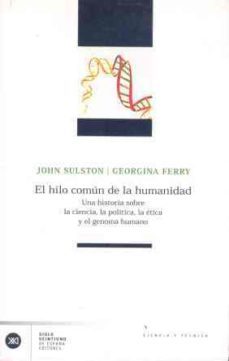














John Sulston, director del Sanger Centre de Cambridge desde 1993 hasta 2000, encabezó el equipo británico que participó en la secuenciación del ADN humano, una hazaña realizada en un tiempo récord gracias a la extraordinaria colaboracion de un equipo internacional de cientificos. El exito final del proyecto, tra numerosos reveses y una dura competencia, puede atribuirse en gran medida a la determinacion, la pasion y la capacidad cientifica de John Sulston . Al relatar su experiencia persona, el autor nos situa entre bastidores de una de las empresas cientificas internacionales mas ambiciosas. Pone al descubierto la politica, las controversias, las distintas eticas y personalidades, las contrariedades y los logros que caracterizaron los siete años de investigacion. Opina con franqueza sobre su relacion de competencia con Craig Venter y su compañia Celera, que estuvo a punto de hacer fracasar el intento de la comunidad internacional por poner la secuencia a libre disponsicion de todos. El hilo comun de la humanidad es a la vez la elocuente historia de estos sensacionales y emocionantes descubrimientos y una llamada a la responsabilidad etica en el campo de la investigacion cientifica. A medida que se van difuminando los limites entre la ciencia y el mundo de los grandes negocios a patentar sus descubrimientos medicos, la comunidad internacional necesita encontrar un procedimiento comun para proteger los intereses humanos mas amplios.
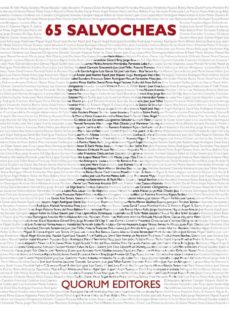
65 poetas, uno por cada año de vida de Fermín Salvochea, se reúnen en este volumen para homenajear la figura del anarquista gaditano. 65 formas de acercarse a un luchador cuyo compromiso, a nivel político y personal, cada vez despierta mayor fascinación.
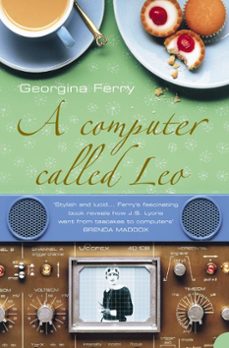
The eccentric story of one of the most bizarre marriages in the history of British business: the invention of the worlds first office computer and the Lyons Teashop. The Lyons teashops were one of the great British institutions, providing a cup of tea and a penny bun through the depression and the war, though to the 1970s. Yet Lyons also has a more surprising claim to history. In the 1930s John Simmons, a young maths graduate in charge of the clerks offices, had a dream: to build a machine that would automate the millions of tedious transactions and process them in as little time as possible. Simmons quest for the first office computer the Lyons Electronic Office would take 20 years and involve some of the most brilliant young minds in Britain. Interwoven with the story of creating LEO is the story of early computing, from the Difference Engine of Charles Babbage to the codecracking computers at Bletchley Park and the instantly obsolescent ENIAC in the US. It is also the story of post war British computer business: why did it lose the initiative? Why did the US succeed while British design was often superior?
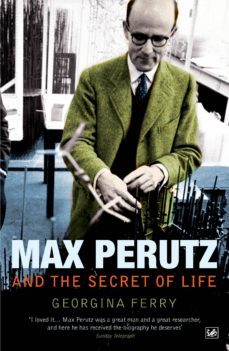
Few scientists have thought more deeply about their calling and its impact on humanity than Max Perutz (1914-2002). Born in Vienna, Jewish by descent, lapsed Catholic by religion, Max came to Cambridge in 1936, to join the lab of the legendary Communist thinker J.D. Bernal. In 1940 he was interned and deported to Canada as an enemy alien, only to be brought back and set to work on a bizarre top secret war project. Seven years later he founded the small research group in which Francis Crick and James Watson discovered the structure of DNA. Max Perutz himself explored the protein haemoglobin and his work, which won him a shared Nobel Prize in 1962, launched a new era of medicine, heralding todays astonishing advances in the genetic basis of disease.Max Perutzs story, wonderfully told by Georgina Ferry, brims with life; it has the zest of an adventure novel and is full of extraordinary characters. Max was demanding, passionate and driven but also humorous, compassionate and loving. Georgina Ferrys absorbing biography is a marvellous tribute to a great scientist.
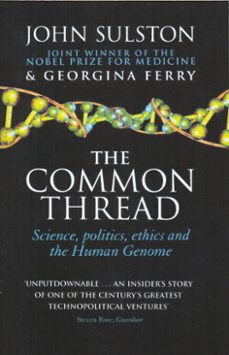
John Sulston was director of the Sanger Centre in Cambridge from 1993 to 2000. There he led the British arm of the international team selected to map the entire human DNA sequence, a feat that was pulled off in record time by an extraordinary collaboration of scientists. Despite innumerable setbacks and challenges from outside competitors the ultimate success of the project can be attributed in large part to John Sulstons own determination, passion and scientific excellence.In this personal account he takes us behind the scenes of one of the largest international scientific operations ever undertaken. He is frank about the competition with Craig Venter and Celera Genomics, which threatened to undermine the international communitys attempts to make the sequence freely available to everyone. He shares with us his excitement as the project unfolded. And as a pragmatist he reveals his hopes and concerns as to how the information unlocked by the Human Genome Project will affect peoples lives in the future.The Common Thread is at once a compelling history of this most exciting of scientific breakthroughs and also an impassioned call for ethical responsibility in scientific research. As the boundaries between science and big business increasingly blur, and researchers race to patent medical discoveries, the international community needs to find a common protocol for the protection of the wider human interest. The Common Thread tells a story of our shared human heritage, offering hope for future research and a fresh outlook on our scientific understanding of ourselves.