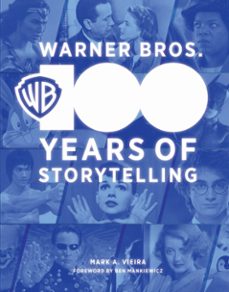
In this official centennial history of the greatest studio in Hollywood, unforgettable stars, untold stories, and rare images from the Warner Bros. vault bring a century of entertainment to vivid life.The history of Warner Bros. is not just the tale of a legendary film studio and its stars, but of classic Hollywood itself, as well as a portrait of America in the last century. Its a family story of Polish-Jewish immigrantsthe brothers Warnerwho took advantage of new opportunities in the burgeoning film industry at a time when four mavericks could invent ways of operating, of warding off government regulation, and of keeping audiences coming back for more during some of the nations darkest days. Innovation was key to their early success. Four years after its founding, the studio revolutionized moviemaking by introducing sound in The Jazz Singer (1927). Stars and stories gave Warner Bros. its distinct identity as the studio where tough guys like Humphrey Bogart and strong women like Bette Davis kept people on the edge of their seats. Over the years, these acclaimed actors and countless others made magic on WBs soundstages and were responsible for such diverse classics as Casablanca, A Streetcar Named Desire, A Star Is Born, Bonnie & Clyde, Malcolm X, Caddyshack, Purple Rain, and hundreds more. Its the studio that put noir in film with The Maltese Falcon and other classics of the genre, where the iconic Looney Tunes were unleashed on animation, and the studio that took an unpopular stance at the start of World War II by producing anti-Nazi films. Counter-culture hits like A Clockwork Orange and The Exorcist carried the studio through the 1970s and 80s. Franchise phenomena like Harry Potter, the DC universe, and more continue to shape a cinematic vision and longevity that is unparalleled in the annals of film history. These stories and more are chronicled in this comprehensive and stunning volume. Copyright 2023 Warner Bros. Entertainment Inc.
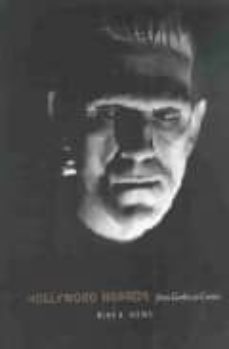
The horror film, which Mark A. Vieira calls "the escape valve of the American psyche", is imprinted on popular culture. "Hollywood Horror" captures all the mystery, power, dark humour and chilling beauty of the genre from its roots in the silent film era to 1968, which, according to Vieira, marks the end of the "classic" scary movie. Illustrated with 300 black-and-white photographs, this book covers every aspect of cinematic horror, from seminal icons such as James Whale''s "Frankenstein" and Tod Browning''s "Dracula" to the steamy pre-Code jungle sorcery of "The Island of the Lost Souls".
Filled with rare images and untold stories from filmmakers, exhibitors, and moviegoers, Forbidden Hollywood is the ultimate guide to a gloriously entertaining era when a lax code of censorship let sin rule the movies.Forbidden Hollywood is a history of "pre-Code" like none other: you will eavesdrop on production conferences, read nervous telegrams from executives to censors, and hear Americans argue about "immoral" movies. You will see decisions artfully wrought, so as to fool some of the people long enough to get films into theaters. You will read what theater managers thought of such craftiness, and hear from fans as they applauded creativity or condemned crassness. You will see how these films caused a grass-roots movement to gain control of Hollywood-and why they were "forbidden" for fifty years.The book spotlights the twenty-two films that led to the strict new Code of 1934, including Red-Headed Woman, Call Her Savage, and She Done Him Wrong. Youll see Paul Muni shoot a path to power in the original Scarface; Barbara Stanwyck climb the corporate ladder on her own terms in Baby Face; and misfits seek revenge in Freaks.More than 200 newly restored (and some never-before-published) photographs illustrate pivotal moments in the careers of Clara Bow, Joan Crawford, Norma Shearer, and Greta Garbo; and the pre-Code stardom of Claudette Colbert, Cary Grant, Marlene Dietrich, James Cagney, and Mae West. This is the definitive portrait of an unforgettable era in filmmaking.
La historia de Warner Bros. es el relato no solo de un estudio legendario y de sus estrellas sino también del propio Hollywood. Y además, es un retrato del último siglo de Estados Unidos. Es la historia familiar de unos inmigrantes polacos (los hermanos Warner) que aprovecharon las oportunidades que ofrecia la pujante industria del cine en un momento en que se podia inven-tar formas de operar, de burlar la legislacion y de conseguir que el publico regresara durante los peores momentos del pais. La innovacion fue crucial para obtener el exito inicial. Cuatro años despues de su fun-dacion, el estudio revoluciono el cine intro-duciendo el sonido con El cantor de jazz (1927). Actores y tramas dieron a Warner Bros. una iden-tidad propia, ya que solo alli eran capaces de tener a los espectadores en vilo un tipo brusco como Humphrey Bogart o una mujer fuerte como Bette Davis. Con el paso del tiempo, estos dos artistas y muchos mas hicieron magia en los platos y estu-vieron detras de clasicos tan variopintos como Casablanca, Un tranvia llamado deseo, Ha nacido una estrella, Bonnie y Clyde, Malcolm X, El club de los chalados o Purple Rain, entre otros. Es el estudio que introdujo el noir a traves de cintas como El halcon maltes entre otros clasicos del genero. Alli, los emblematicos Looney Tunes dominaron la animacion. Tambien fue el estu-dio que adopto una postura impopular al principio de la Segunda Guerra Mundial produciendo filmes contra los nazis. La naranja mecanica y El exorcista acompañaron a Warner Bros. a lo largo de los años setenta y ochenta. Y ahora, hay fran-quicias como Harry Potter o el Universo DC que siguen dando forma a una vision cinematografica y longeva que no tiene parangon en los anales de la industria del cine. Estas historias, entre otras, se cuentan en este exhaustivo repaso.