Rebecca Newberger Goldstein recibió una beca de la Fundación MacArthur, fue designada Humanista del año y Heroína del libre pensamiento, y es miembro de la Academia Estadounidense de Artes y Ciencias. Sus libros premiados incluyen las novelas 'El problema mente-cuerpo' o '36 argumentos para la existencia de Dios' y ensayos sobre Kurt Gödel y Baruch Spinoza.
Recibe novedades de Rebecca Goldstein directamente en tu email

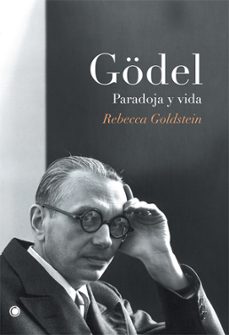
Una introducción magistral a la vida y pensamiento del hombre que transformó para siempre nuestra concepción de las matemáticas. Se considera a Kurt Gödel el lógico más importante desde Aristóteles.
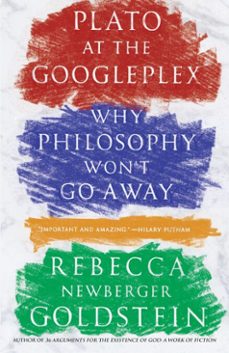
Is philosophy obsolete? Are the ancient questions still relevant in the age of cosmology and neuroscience, not to mention crowd-sourcing and cable news? The acclaimed philosopher and novelist Rebecca Newberger Goldstein provides a dazzlingly original plunge into the drama of philosophy, revealing its hidden role in todays debates on religion, morality, politics, and science. At the origin of Western philosophy stands Plato, who got about as much wrong as one would expect from a thinker who lived 2,400 years ago. But Platos role in shaping philosophy was pivotal. On her way to considering the place of philosophy in our ongoing intellectual life, Goldstein tells a new story of its origin, re-envisioning the extraordinary culture that produced the man who produced philosophy. But it is primarily the fate of philosophy that concerns her. Is the discipline no more than a way of biding our time until the scientists arrive on the scene? Have they already arrived? Does philosophy itself ever make progress? And if it does, why is so ancient a figure as Plato of any continuing relevance? Plato at the Googleplex is Goldsteins startling investigation of these conundra. She interweaves her narrative with Platos own choice for bringing ideas to lifethe dialogue. Imagine that Plato came to life in the twenty-first century and embarked on a multicity speaking tour. How would he handle the host of a cable news program who denies there can be morality without religion? How would he mediate a debate between a Freudian psychoanalyst and a tiger mom on how to raise the perfect child? How would he answer a neuroscientist who, about to scan Platos brain, argues that science has definitively answered the questions of free will and moral agency? What would Plato make of Google, and of the idea that knowledge can be crowd-sourced rather than reasoned out by experts? With a philosophers depth and a novelists imagination and wit, Goldstein probes the deepest issues confronting us by allowing us to eavesdrop on Plato as he takes on the modern world.(With black-and-white photographs throughout.)
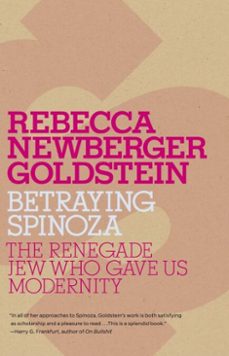
Part of the Jewish Encounter seriesIn 1656, Amsterdams Jewish community excommunicated Baruch Spinoza, and, at the age of twentythree, he became the most famous heretic in Judaism. He was already germinating a secularist challenge to religion that would be as radical as it was original. He went on to produce one of the most ambitious systems in the history of Western philosophy, so ahead of its time that scientists today, from string theorists to neurobiologists, count themselves among Spinozas progeny.In Betraying Spinoza, Rebecca Goldstein sets out to rediscover the flesh-and-blood man often hidden beneath the veneer of rigorous rationality, and to crack the mystery of the breach between the philosopher and his Jewish past. Goldstein argues that the trauma of the Inquisition s persecution of its forced Jewish converts plays itself out in Spinozas philosophy. The excommunicated Spinoza, no less than his excommunicators, was responding to Europe s first experiment with racial anti-Semitism.Here is a Spinoza both hauntingly emblematic and deeply human, both heretic and heroa surprisingly contemporary figure ripe for our own uncertain age.
From the author of The Mind-Body Problem: a witty and intoxicating novel of ideas that plunges into the great debate between faith and reason. At the center is Cass Seltzer, a professor of psychology whose book, The Varieties of Religious Illusion, has become a surprise best seller. Dubbed the atheist with a soul, he wins over the stunning Lucinda Mandelbaumthe goddess of game theory. But he is haunted by reminders of two people who ignited his passion to understand religion: his teacher Jonas Elijah Klapper, a renowned literary scholar with a suspicious obsession with messianism, and an angelic six-year-old mathematical genius, heir to the leadership of an exotic Hasidic sect. Hilarious, heartbreaking, and intellectually captivating, 36 Arguments explores the rapture and torments of religious experience in all its variety.