Si se analiza el universo con las herramientas hoy a nuestro alcance, comprobamos que se funda en la imperfección, y no sólo eso, sino que ésta es su principal motor. Sólo donde hay imperfección hay algo que sucede -un evento, un proceso, un cambio, una relacion-, mientras que la perfeccion es, por el contrario, algo completo y atemporal. En estas paginas, el filosofo de la ciencia Telmo Pievani nos ofrece una completisima y estimulante historia natural de la imperfeccion biologica en la que nos muestra como desde el principio de los tiempos hasta hoy, desde los protozoos al Homo sapiens sapiens, las especies, sujetas a una evolucion regida por el azar y sometidas a este rasgo que les es tan inherente como fundamental, han tenido que adaptarse y abrirse camino en la admirable aventura de la vida.
Trad., Silvia Schettin La teoría de la evolución formulada por Darwin constituye el marco teórico ineludible en el que se inscriben todos los estudios de la biología contemporánea. La biología molecular, la paleontologia, la ecologia, la medicina, la antropologia: ninguna de estas disciplinas tendria sentido fuera del corpus conceptual evolucionista. Desde sus primeras anotaciones escritas en los años treinta del siglo XIX, Charles Darwin tuvo claro que la suya era algo mas que una teoria cientifica: era un largo razonamiento que socavaba los cimientos de la concepcion providencialista del mundo y que incluia definitivamente al hombre en las leyes de la naturaleza. En los casi dos siglos que la separan de nuestros dias, la teoria de la evolucion se ha visto enriquecida por muchos nuevos datos y por una gran variedad de pruebas experimentales y empiricas. Darwin sigue funcionando. Pero desde siempre, ha habido quienes se oponen a el, tratando de desacreditar el darwinismo, acusandolo de una debilidad de la que carece o atribuyendole hechos nefastos que le son totalmente ajenos. Con admirable claridad y buenas dosis de ironia, Pievani nos ayuda a comprender el trasfondo cultural de los nuevos creacionistas, defensores de un diseño inteligente, bien condimentado con una salsa teo-con.
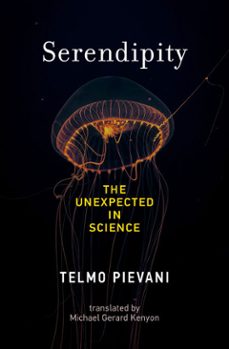
From the bestselling author of Imperfection, a theory of uncertainty as the very core of the scientific methodand the essence of its wonder.How many times have we looked for something and found something else? A partner, a job, an object? The same thing often happens to scientists: they design an experiment and discover the unexpected, which usually turns out to be very important. This fascinating phenomenon is called serendipity, which takes its name from the mythical Serendip, a place from which, according to a Persian fable, three princes set off to explore the world, making chance discoveries along the way. In Serendipity, the award-winning author of Imperfection Telmo Pievani returns to weave a compelling story about the unexpected in science and its fascinating role in our understanding of the world.Going far beyond the usual examples of penicillin, X-rays, the microwave oven, and Christopher Columbus, Pievani shows that the most surprising stories of serendipity in the history of science reveal profound aspects of the logic of scientific discovery. In this book, he presents for the first time: an archaeology of the idea; a taxonomy of serendipitous discoveries; an ecology of serendipity (the surrounding conditions and factors that can promote it); and lastly, a theory of serendipity (why it occurs so frequently in so many sciences). From Zadig to Sherlock Holmes, Pievani shows that such great discoveries are not just the product of luck. Instead, serendipity comes from a mix of cunning, curiosity, sagacity, imagination, and accidents caught on the fly. Serendipity illuminates how much we dont know and how much we dont even know we dont know. Above all, Pievani reminds us that the human brain is of a piece with the world it is investigatinga world so much bigger than our knowledgeand it has also evolved within that world, adapting as it has to.
In praise of imperfection: how life on our planet is a catalog of imperfections, errors, alternatives, and anomalies.In the beginning, there was imperfection, which became the source of all things. Anomalies and asymmetries caused planets to take shape from the bubbling void and sent light into darkness. Life on earth is a catalog of accidents, alternatives, and errors that turned out to work quite well. In this book, Telmo Pievani shows that life on our planet has flourished and survived not because of its perfection but despite (and perhaps because of) its imperfection. He begins his story with the disruption-filled birth of the universe and proceeds through the random DNA copying errors that fuel evolution, the transformations of advantages into handicaps by natural selection, the anatomical and functional jumble that is the human brain, and our many bodily mismatches. Along the way, Pievani tells readers about the Irish elk (incidentally, neither Irish nor elk), whose enormous antlers serve to illustrate the first two laws of imperfection; the widespread dissemination of costly or useless traits; and the neuroimperfection of the human braina frozen accident of evolution that was not designed from scratch, as Pievani calls it. He sizes up the alleged perfection of the human body, asking, for example, if everything in our bodies serves a purpose, why do we have appendixes? Why bipedalism, with the inevitable back pain that results? In this fascinating account, Pievani offers the first comprehensive explanatory theory for the ubiquity of imperfection.
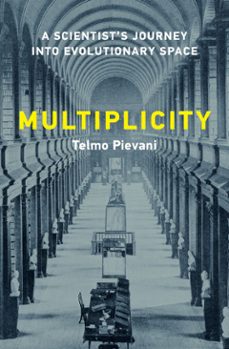
The awe-inspiring, little-known story of Nobel laureate Frances Arnolds discovery of directed enzyme evolutionand how it was sparked by reading Jorge Luis Borges.In 1976, a young engineering student from Princeton, Frances Arnold, happened upon Jorge Luis Borgess short story The Library of Babel while in Madridthe tale of a vast honeycomb of a library that contains all the answers to the mysteries of humanity. Little did Arnold know that the story would change the course of her lifeand the course of science.In Multiplicity, Telmo Pievani explores her journey and the significanceand scientific potentialof Borgess legendary library and others like it. A famous evolutionist, John Maynard Smith, for instance, had fantasized about the existence of a similar enormous library: full not of books, but of proteins. And, in 1994, a philosopher of mind, Daniel Dennett, would devise a library no less confounding: one that collects all possible genomes, or all the possible combinations of the nucleotide bases of DNA. Why? Because by comparing all the proteins, genomes, and plants and animals that exist and have existed throughout evolution, what is finally revealed is possibility: what doesnt exist but could.For Frances Arnold, the concept of such a library ultimately led to the discovery of the directed evolution of enzymes: a way of using natures own method to produce new and better enzymes. The revolutionary idea transformed protein chemistry and biotechnology and earned her the Nobel prize in chemistry in 2018.With literary echoes ranging from Borges to Italo Calvino, this slim book tells her brilliant story.
Si se analiza el universo con las herramientas hoy a nuestro alcance, comprobamos que se funda en la imperfección, y no sólo eso, sino que ésta es su principal motor. Sólo donde hay imperfección hay algo que sucede -un evento, un proceso, un cambio, una relacion-, mientras que la perfeccion es, por el contrario, algo completo y atemporal. En estas paginas, el filosofo de la ciencia Telmo Pievani nos ofrece una completisima y estimulante historia natural de la imperfeccion biologica en la que nos muestra como desde el principio de los tiempos hasta hoy, desde los protozoos al Homo sapiens sapiens, las especies, sujetas a una evolucion regida por el azar y sometidas a este rasgo que les es tan inherente como fundamental, han tenido que adaptarse y abrirse camino en la admirable aventura de la vida.