In an age where social media dominates our daily lives and interactions, its easy to believe that platforms like Facebook are essential to maintaining and nurturing relationships. However, in Beyond the Status Update: Why Facebook Isnt Essential in Relationships, Benjamin Foster takes a deep dive into the true nature of human connections, exploring how meaningful relationships thrive beyond the digital facade.Through insightful analysis and real-life examples, this book challenges the notion that social media is the cornerstone of modern relationships. Foster examines how genuine communication, emotional intimacy, and personal growth can be achieved without relying on Facebook updates, likes, and comments.Whether youre looking to strengthen your romantic relationship, deepen friendships, or simply understand the impact of social media on your social life, Beyond the Status Update offers valuable perspectives and practical advice. Discover how to build and maintain fulfilling relationships in a world that often prioritizes virtual connections over real-life interactions.Key Topics: The psychology of social media and its impact on relationships Alternatives to Facebook for maintaining and enhancing connections Strategies for effective communication and emotional bonding Real-life stories of people who have thrived without social media Practical tips for reducing social media dependency Join Benjamin Foster on a journey to rediscover the essence of human connection and learn why you dont need Facebook to have meaningful relationships.
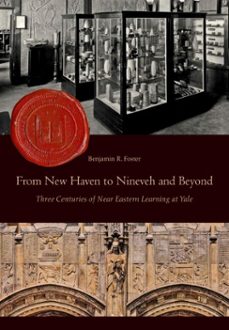
Over the course of three centuries, Yale has been actively and seriously engaged in Near Eastern learning, in both senses of the term-training students in the knowledge and skills needed to understand the languages and civilizations of the region, and supporting generations of scholars renowned for their erudition and pathbreaking research. This book traces the history of these endeavors through extensive use of unpublished archival materials, including letters, diaries, and records of institutional decisions. Developments at Yale are set against the wider background of changing American attitudes toward the Near East, as well as evolving ideas about the role of the academy and its curriculum in educating undergraduate and graduate students. In the case of the Near East, this also involves considering how several of its disciplines made the transition from biblically motivated enterprises to secular fields of study. Yale has notable firsts to her credit: the first American professional program in Arabic and Sanskrit; the first American learned society and periodical devoted to Oriental subjects; the first American research institutes in Jerusalem and Baghdad; the first American university to have endowed funds to establish and curate one of the worlds largest collections of cuneiform tablets and cylinder seals. Yet at the same time, especially over the past half-century, Yale has found it challenging to deal administratively with a small humanities department whose standards and philosophy of teaching and learning seemed increasingly at odds with trends in the university as a whole. This book places these tensions in the context of Yales responses to post-World War 2 interest in the modern Middle East, the rise of government-supported "area studies," and the consequences of American military actions in Iraq and Afghanistan. Numerous illustrations, many of them previously unpublished and drawn from a wide range of source material, round out the portrait of three centuries of Near Eastern learning at Yale.