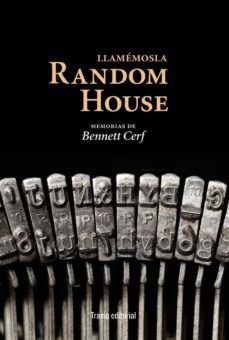
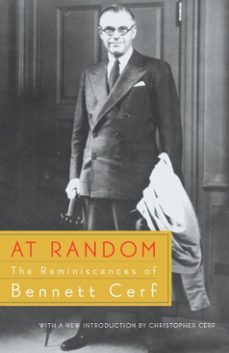
Bennett Cerf, fundador de la editorial Random House, publicó en su época a los escritores que formarían parte de la ‘edad de oro’ literaria de Estados Unidos, como Faulkner, O''Hara, O''Neill, Capote
Ive got the name for our publishing operation. We just said we were going to publish a few books on the side at random. Lets call it Random House. So recounts Bennett Cerf in this wonderfully amusing memoir of the making of a great publishing house. An incomparable raconteur, possessed of an irrepressible wit and an abiding love of books and authors, Cerf brilliantly evokes the heady days of Random Houses first decades. Part of the vanguard of young New York publishers who revolutionized the book business in the 1920s and 30s, Cerf helped usher in publishings golden age. Cerf was a true personality, whose other pursuits (columnist, anthologist, author, lecturer, radio host, collector of jokes and anecdotes, perennial judge of the Miss America pageant, and panelist on Whats My Line?) helped shape his reputation as a man of boundless energy and enthusiasm and brought unprecedented attention to his company and to his authors. At once a rare behind-the-scenes account of book publishing and a fascinating portrait of four decades worth of legendary authors, from James Joyce and William Faulkner to Ralph Ellison and Eudora Welty, At Random is a feast for bibliophiles and anyone whos ever wondered what goes on inside a publishing house.
Donald Klopfer and Bennett Cerf had been partners in Random House for seventeen years, but Donald decided that he had to become a part of an even greater endeavorthe defeat of Nazi Germany. Not long after Pearl Harbor, Donald, who was then forty years old, took a leave from Random House and joined the United States Army Air Forces. He served for two and a half years, finally becoming an intelligence major in a B-24 group in England. Donald and Bennett wrote to each other regularly all during that period. Bennett sent Donald long newsy letters about the book businessauthors, sales, publishing gossipas well as about what was happening in New York. Donald reacted in his wise, serene way to Bennetts letters, and conveyed news of what was going on in the war, though sometimes censorship took its toll.This is nostalgia with substance, and because these letters were never intended to be read by anyone else, they reveal, in a convincing and wonderful way, just how special these two men were and how that specialness was reflected in the company they founded.