




























El inicio de la creatividad parece ser: «Todo empezó por un sueño». Un concepto revolucionario, generador de los mayores avances y cautivante en su estudio. En Para ti, creatividad se analiza el tema
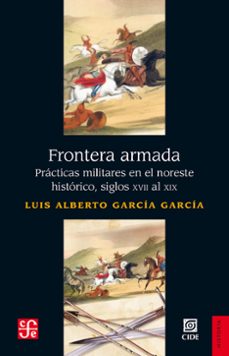
La obra analiza la organización militar de la frontera noreste de Nueva España, después México independiente, y abunda en la idea de que ésta conservó un carácter eminentemente ibérico-medieval desde que los españoles llegaron en el siglo xvii hasta bien entrada la segunda mitad del siglo xix. A traves del estudio de cuatro poblaciones, dos en Texas y dos en el noreste de Mexico, expone como las tradiciones medievales sobrevivieron a pesar de los intentos de las autoridades metropolitanas coloniales de imponer modelos mas modernos, y explica como los antecedentes formativos de los colonos europeos en Norteamerica contribuyeron a delinear la formacion cultural del subcontinente.
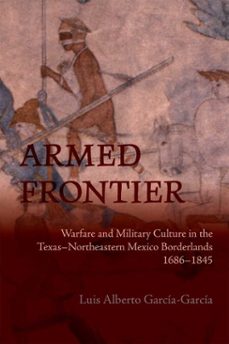
Armed Frontier is a deeply researched and yet accessible history of border skirmishes from mid-colonial times to the first Texas secession.The history of warfare and armed organization during the colonial period and early nineteenth century in southern Texas and northeastern Mexico remains largely untold. Previous studies either cover the influence of warfare tangentially or ignore its importance. This study explores the topic through an examination of the inhabitants of four settlements: San Antonio and Laredo in Texas, as well as Lampazos and Bustamante in northeastern Mexico. All four of those settlements had Hispanic, Mesoamerican, and Native American elements that intermingled, adapted, and evolved over several centuries, creating a distinctive society in which armed service and military culture played a central role in social organization. This work uses multiple archival records, many previously unknown, from Mexico, Texas, and Spain. It places the local and micro historical aspects of borderlands military culture into the broader context of the Spanish Empire, Mexican nationalism, and the Atlantic World.Armed Frontier focuses on how military organization and methods of warfare in these regions were influenced by the heritage of medieval Iberian martial traditions. It provides a different analysis of borderland societies through several historical periods including the Reconquista, the conquest of Mexico, the colonial period, the wars of independence, the Mexican Republic, and the age of federalism and centralism, all against the backdrop of a burgeoning geopolitical rivalry with the United States. The themes covered in the book illustrate the complexities of borderlands societies through a linear analysis of local sources, inserted in a broad geopolitical context and accessible to a wide audience.