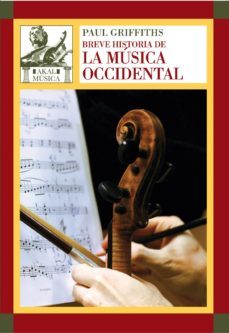
El presente libro ofrece una historia del devenir de la música occidental, no sólo de sus grandes compositores e intérpretes, sino también de los cambios que han ido experimentando las ideas en torno a su esencia y su función. al hilo de este planteamiento, el autor sugiere hasta qué punto esta evolución es reflejo del desarrollo de la concepción humana del tiempo. Escrita con claridad y rigor, sus veinticuatro capítulos constituyen una lectura esencial y esclarecedora para estudiantes, profesores y amantes de la música en general.
Olivier Messiaen was one of the outstanding creative artists of his time. The strength of his appeal, to listeners as well as to composers, is a measure of the individuality of his music, which draws on a vast range of sources: rhythms of twentieth-century Europe and thirteenth-century India, ripe romantic harmony and brittle birdsong, the sounds of Indonesian percussion and modern electronic instruments. What binds all these together is, on one level, his unswerving devotion to praising God in his art, and on another, his independent view of how music is made. Messiaens music offers a range of ways of experiencing time: time suspended in music of unparalleled changelessness, time racing in music of wild exuberance, time repeating itself in vast cycles of reiteration.In Olivier Messiaen and the Music of Time, leading writer and musicologist, Paul Griffiths, explores the problems of religious art, and includes searching analyses and discussions of all the major works, suggesting how they function as works of art and not only as theological symbols. This comprehensive and stimulating book covers the whole of Messiaens output up to and including his opera, Saint Françoise dAssise.
El presente libro ofrece una historia del devenir de la música occidental, no sólo de sus grandes compositores e intérpretes, sino también de los cambios que han ido experimentando las ideas en torno a su esencia y su funcion. al hilo de este planteamiento, el autor sugiere hasta que punto esta evolucion es reflejo del desarrollo de la concepcion humana del tiempo. Escrita con claridad y rigor, sus veinticuatro capitulos constituyen una lectura esencial y esclarecedora para estudiantes, profesores y amantes de la musica en general.
This superbly authoratitive new work provides a comprehensive A-Z guide to some 1000 years of Western music. It explores in detail the lives and achievements of a vast range of composers, as well as looking at such key topics as music history (from medieval plainchant to contemporary minimalism), performers, theory and jargon. Throught Griffiths skilfully blends lightly worn scholarship with personal insight, whether examining the emotional colouring that different musical keys achieve or charting the rise and development of the symphony.
Two novels from the perspective of Hamlets Opheliathe first set before the events of the play, the second afterwritten entirely by remixing and repurposing the characters dialogue from Shakespeares original text.So: now I come to speak. With this line, Shakespeares Ophelia starts telling her story. In let me tell you, this newly revealed woman uses exactly the same words Shakespeare gave her in Hamlet, shifted as in a kaleidoscope to create a very different voice: her own. We hear her personal narrative from childhood to the moments before the start of the play, when she knows she has a fateful decision to make. Along the way, we discover whole new angles on her father, her brother, the prince, and other characters who come out from behind the curtain.In let me go on, her decision made, she refashions herself. Emerging from her old world, she explores a new one, of magical variety yet coherent. As she goes in search of what she may still become, she meets a new cast of characters, some poignant, some hilarious. Paul Griffiths gives this remarkable protagonistand usa play-full of humor, poignancy, passion, adventure, and a great many surprises.