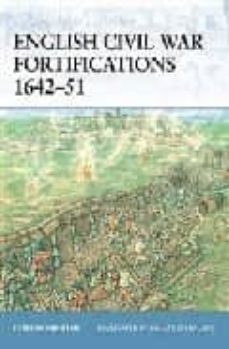
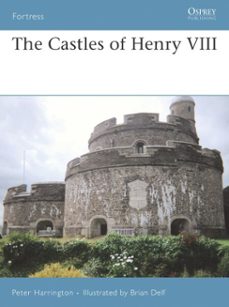
The techniques of European warfare were transformed during the 15th and 16th centuries by the use of gunpowder and by substantial progress in the effectiveness and destructive power of artillery. The series of conflicts in the 1640s, known collectively as the English Civil War, was the first in the British Isles that reflected this new reality. Sieges that aimed at isolating and reducing fortified places became the dominant instrument for prosecuting the war and protective fortifications were vital, for both the besieged as well as the besieger. This title describes how both the Parliamentarians and the Royalists made use of new fortification techniques throughout the course of this conflict.
SummaryMachine Learning in Action is unique book that blends the foundational theories of machine learning with the practical realities of building tools for everyday data analysis. Youll use the flexible Python programming language to build programs that implement algorithms for data classification, forecasting, recommendations, and higher-level features like summarization and simplification.About the BookA machine is said to learn when its performance improves with experience. Learning requires algorithms and programs that capture data and ferret out the interestingor useful patterns. Once the specialized domain of analysts and mathematicians, machine learning is becoming a skill needed by many.Machine Learning in Action is a clearly written tutorial for developers. It avoids academic language and takes you straight to the techniques youll use in your day-to-day work. Many (Python) examples present the core algorithms of statistical data processing, data analysis, and data visualization in code you can reuse. Youll understand the concepts and how they fit in with tactical tasks like classification, forecasting, recommendations, and higher-level features like summarization and simplification.Readers need no prior experience with machine learning or statistical processing. Familiarity with Python is helpful. Purchase of the print book comes with an offer of a free PDF, ePub, and Kindle eBook from Manning. Also available is all code from the book. Whats Inside A no-nonsense introduction Examples showing common ML tasks Everyday data analysis Implementing classic algorithms like Apriori and Adaboos Table of Contents PART 1 CLASSIFICATION Machine learning basics Classifying with k-Nearest Neighbors Splitting datasets one feature at a time: decision trees Classifying with probability theory: naive Bayes Logistic regression Support vector machines Improving classification with the AdaBoost meta algorithm PART 2 FORECASTING NUMERIC VALUES WITH REGRESSION Predicting numeric values: regression Tree-based regression PART 3 UNSUPERVISED LEARNING Grouping unlabeled items using k-means clustering Association analysis with the Apriori algorithm Efficiently finding frequent itemsets with FP-growth PART 4 ADDITIONAL TOOLS Using principal component analysis to simplify data Simplifying data with the singular value decomposition Big data and MapReduce