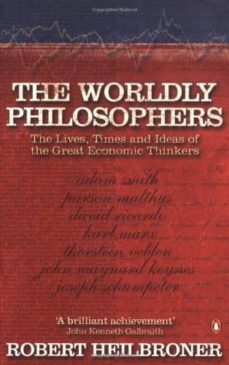
















The seventh, profoundly revised and final edition of Robert Heilbroner''s classic bestseller With over two million copies sold worldwide, The Worldly Philosophers is one of the most widely read texts on the history of economics ever written. It defines the common thread linking the world''s greatest economic thinkers from Adam Smith to Malthus, from Marx to John Maynard Keynes, and explores the philosophies that motivated them. This not only enables us to see more deeply into our history, but, through understanding how a capitalist society works, also helps us to better understand our own times. In a bold new last chapter entitled ''The End of the Worldly Philosophers?'', Heilbroner reminds us that the word ''end'' refers both to the purpose and the limits of economics. He argues that today''s increasingly ''scientific'' economics may overlook fundamental social and political issues that are central to economics. Thus, unlike its predecessors, this new edition provides not just an indispensable illumination of our past, but a call to action for our future.
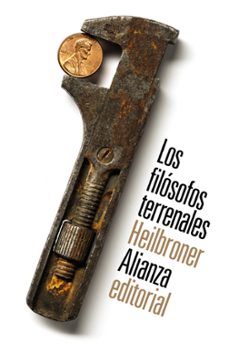
Libro clásico de rara penetración y profundo rigor, "Los filósofos terrenales" de Robert L. Heilbroner realiza un recorrido por las vidas, tiempos e ideas de los pensadores más eminentes que dedicaron su atencion a la economia y le dieron forma como ambito de conocimiento autonomo, desde Adam Smith y los socialistas utopicos hasta Keynes y Schumpeter. Mezclando sabiamente pensamiento economico, biografia y contexto historico e intelectual para cada uno de ellos y extrayendo conclusiones breves, pero contundentes, Heilbroner no permite olvidar que la economia es una ciencia social y que, como tal, por mas que aspire a la objetividad, no puede soslayar enfrentarse a juicios de valor que no pueden resolverse mediante simples argumentos matematicos o tecnicos. Que hacer cuando hay sectores de la poblacion que se van hundiendo en una creciente pobreza o con la riqueza hereditaria son cuestiones que estan en la base de la autentica economia, cada vez mas lejana de la version pervertida de ella, hoy corriente, que amenaza con sepultarla definitivamente.
¿Qué es el capitalismo? Incisiva pregunta que nos lleva a explorar los niveles inconscientes de la psique y a las raíces mismas de la dominación y la sumisión; a las formas de organización primitivas y los origenes de la riqueza; a las fuentes de la ganancia y la concepcion de un regimen de capital; a la interaccion de los cambios relativamente lentos de las instituciones y la poderosa fuerza de la acumulacion de la riqueza. Nos acerca un poco mas a la comprension del capitalismo de nuestra epoca, sus posibilidades, sus limites.
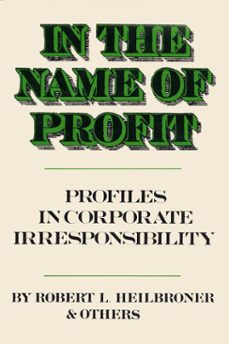
Said One Executive: Why should my conscience bother me?Here are dramatic true stories of executives whose desire for profit leads them into shameful decisions. Naming actual executive of major American companies, the authors portray corporate irresponsibility in human term. One executive is shown as he orders his subordinates to fake a lab report, even though the result might be loss of life. Others are shown as they bribe a city official, as they knowingly sell a dangerous drug, as they enrich themselves by betraying their stockholders. These men are not the familiar fast-buck artists, the petty cheats who can be dismissed as bad apples. The authors reveal themselves as solid citizens, educated and well-respected. Yet in the course of business they easily yield to ambition, avarice or the corporate culture. And almost always, after they are exposed, they are promoted by their companies.Together these profiles, all of them written especially for this book, give life to questions raised by books such as America, Inc. and The Greening of America:· What kind of men run some super-corporations?· How can good men behave so badly· Does working for a corporation mean violating ones conscience? After all the stories are told, the brilliant economist and social critic Robert L. Heilbroner offers a chapter of perspective. First he confronts the various positions on corporate responsibilityat one extreme, breaking up the big corporations; at the other, leaving executive entirely free to maximize profits. And then he cuts through to the realities if the matter, showing us where the best chance of remedy lies.