In 11 Days In December, master historian and biographer Stanley Weintraub tells the remarkable story of the Battle of the Bulge as it has never been told before, from frozen foxholes to barn shelters to boxcars packed with wretched prisoners of war.In late December 1944, as the Battle of the Bulge neared its climax, a German loudspeaker challenge was blared across GI lines in the Ardennes: "How would you like to die for Christmas?" In the inhospitable forest straddling Belgium, France, and Luxembourg, only the dense, snow-laden evergreens recalled the season. Most troops hardly knew the calendar day they were trying to live through, or that it was Hitlers last, desperate effort to alter the wars outcome. Yet the final Christmas season of World War II matched desperation with inspiration. When he was offered an ultimatum to surrender the besieged Belgian town of Bastogne, Brigadier General Anthony McAuliffe defied the Germans with the memorable one-word response, "Nuts!" And as General Patton prayed for clear skies to allow vital airborne reinforcements to reach his trapped men, he stood in a medieval chapel in Luxembourg and spoke to God as if to a commanding general: "Sir, whose side are you on?" His prayer was answered. The skies cleared, the tide of battle turned, and Allied victory in World War II was assured. Christmas 1944 proved to be one of the most fateful days in world history. Many men did extraordinary things, and extraordinary things happened to ordinary men. "A clear cold Christmas," Patton told his diary, "lovely weather for killing Germans, which seems a bit queer, seeing whose birthday it is." Peace on earth and good will toward men would have to wait.11 Days in December is unforgettable.
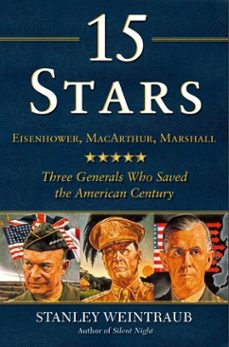
The sweeping and dramatic story of Americas three great five-star generals, who steered America to victory through World War II and shaped the decade that followed, while jockeying against and helping one another as patrons, bosses, friends, and rivals.In the closing days of World War II, America looked up to three five-star generals as its greatest heroes. George C. Marshall, Dwight D. Eisenhower, and Douglas MacArthur personified victory, from the Pentagon to Normandy to the Far East. Counterparts and on occasion competitors, they had leapfrogged each other, sometimes stonewalled each other, even supported and protected each other throughout their celebrated careers. In the public mind they stood for glamour, integrity, and competence. But for dramatic twists of circumstance, all threerather than only onemight have occupied the White House. The story of their interconnected lives opens a fascinating window onto some of the twentieth centurys most crucial events, revealing the personalities behind the public images and showing how much of a difference three men can make. Marshall and MacArthur were contemporaries and competitors. Eisenhower was MacArthurs underling, then Marshalls deputy, before becoming MacArthurs counterpart as a supreme commander, Ike in Western Europe, MacArthur in the Pacific. Each of the three five-star generals would go on to extraordinary postwar careers: MacArthur as a virtual viceroy of Japan, overseeing its transition to a new constitutional democracy, and then leading the UN forces in the Korean War; Marshall as secretary of state, author of the Marshall Plan, and winner of the Nobel Peace Prize; Eisenhower as president.Fifteen Stars presents the intertwined lives of these three great men against the sweeping background of six unforgettable decades, from two world wars to the Cold War. It is history at its most dramatic yet most personala triumph for Stanley Weintraub, our preeminent military historian.
From an acclaimed military historian comes the astonishing story of World War Is 1914 Christmas trucea spontaneous celebration when enemies became friends.It was one of historys most powerfulyet forgottenChristmas stories. It took place in the improbable setting of the mud, cold rain, and senseless killing of the trenches of World War I. It happened in spite of orders to the contrary by superiors. It happened in spite of language barriers. And it still stands as the only time in history that peace spontaneously arose from the lower ranks in a major conflict, bubbling up to the officers and temporarily turning sworn enemies into friends.Silent Night, by renowned military historian Stanley Weintraub, magically restores the 1914 Christmas Truce to history. It had been lost in the tide of horror that filled the battlefields of Europe for months and years afterward. Yet, in December 1914, the Great War was still young, and the men who suddenly threw down their arms and came together across the front linesto sing carols, exchange gifts and letters, eat and drink and even play friendly games of soccernaively hoped that the war would be short-lived, and that they were fraternizing with future friends.It began when German soldiers lit candles on small Christmas trees, and British, French, Belgian, and German troops serenaded each other on Christmas Eve. Soon they were gathering and burying the dead, in an age-old custom of truces. But as the power of Christmas grew among them, they broke bread, exchanged addresses and letters, and expressed deep admiration for one another. When angry superiors ordered them to recommence the shooting, many men aimed harmlessly high overhead.Sometimes the greatest beauty emerges from deep tragedy. Surely the forgotten Christmas Truce was one of historys most beautiful moments, made all the more beautiful in light of the carnage that followed it. Stanley Weintraubs moving re-creation demonstrates that peace can be more fragile than war, but also that ordinary men can bond with one another despite all efforts of politicians and generals to the contrary.
In Young Mr. Roosevelt Stanley Weintraub evokes Franklin Delano Roosevelts political and wartime beginnings. An unpromising patrician playboy appointed assistant secretary of the Navy in 1913, Roosevelt learned quickly and rose to national visibility in World War I. Democratic vice-presidential nominee in 1920, he lost the election but not his ambitions. While his stature was rising, his testy marriage to his cousin Eleanor was fraying amid scandal quietly covered up. Ever indomitable, even polio a year later would not suppress his inevitable ascent.Against the backdrop of a reluctant Americas entry into a world war and FDRs hawkish build-up of a modern navy, Washingtons gossip-ridden society, and the nations surging economy, Weintraub summons up the early influences on the young and enterprising nephew of his predecessor, Uncle Ted.
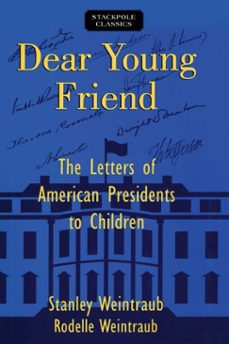
Just a few of the words of presidential wisdom found in Dear Young Friend:I rejoice that you have learnt to write,for as this is done with a goosequill, you know the value of a goose. Thomas Jefferson, to his granddaughter, Cornelia RandolphAs to the whiskers, having never worn any, do you not think people would call it a bit of silly affection if were to begin now? Abraham Lincoln to Grace BedellIf we are successful [in the election], it will not be handsome behavior for any of my family to exhibit exultation or talk boastingly, or be in vain about it. Rutherford B. Hayes, to his son RuddyThe other sixty cents are for my other six grandchildren. They are not born yet. Theodore Roosevelt, to Marjorie Sterrett, who was collecting dimes to fund a battleshipThe John Birchers are just Ku Klux without the nightshirts. Harry Truman to David S. McCrackenIf you really believe, you will see them. My [Irish] little people are very small, wear tall black stovepipe hats, green coats and pants, and have long, white beards. John Kennedy to Mark Aaron PerduePresidents since Washington have written to children. Chief executives prior to the overwhelmingly busy present even went through the White House mail themselves, choosing what to answera task in the e-mail age now impossible. Some earlier presidents, even as late as Eisenhower, confided opinions to young people that they rarely confessed to their peers. The letters range in subject form the monumental to the immaterialalthough almost nothing is insignificant to a child.