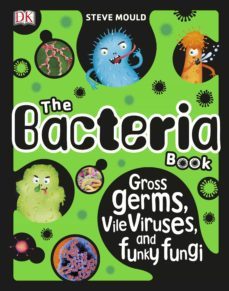
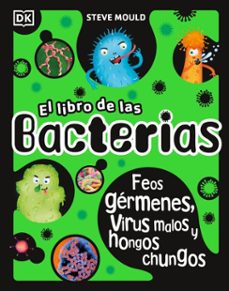
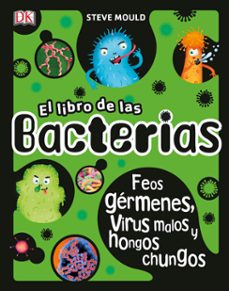
Longlisted for the Best Book of Facts Award in the Blue Peter Book Awards 2018 Meet the bacteria, viruses, and other germs and microbes that are all around, but too small for us to see, in this children's science book by bestselling author and science comedian Steve Mould. What do a squid that glows, fungus that grows, and tiny creatures in the soil under your toes all have in common? Find out in this dynamic and engaging book all about bacteria, viruses, and other germs and microbes. The Bacteria Book perfectly walks the line between "ew, gross!" and "oh, cool!", exploring why we need bacteria and introducing readers to its microbial mates: viruses, fungi, algae, archaea, and protozoa. The Bacteria Book is a fun and informative introduction to a STEAM subject that brings kids up-close to the big world of tiny science. With remarkable photography, kooky character illustrations, and lots of fun facts, this book uses real-life examples of microbiology in action to show how microbes keep our bodies and our world running.
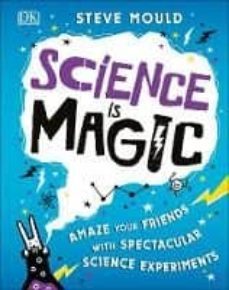
Learn how to perform magic tricks and illusions using simple science experiments in this children's activity book for kids aged 7-9. Join science presenter Steve Mould, #1 bestselling author of How to be a Scientist, to find out the secrets behind amazing magic tricks. Learn how to bend water with a balloon, make a glass beaker disappear in oil, and wow your friends with levitating tinsel! Each magic trick is explained using step-by-step photography, with the science behind each one described clearly and simply. Plus, interspersed throughout the book you'll find out how legendary magicians and illusionists, such as Harry Houdini, used science when performing their most famous tricks. Kids will love impressing their friends and families with simple magic tricks that teach them valuable science lessons at the same time. Packed with optical illusions and fun facts - Science is Magic is a must for any wannabe scientist or magician.
Meet the bacteria, viruses, and other germs and microbes that are all around, but too small for us to see. Learn how they keep us and our world running. What do a squid that glows, fungus that grows, and tiny creatures in the soil under your toes all have in common? Theyre all part of the world of microbiology! In this awesome book for kids, scientist Steve Mould reveals fun and fascinating facts about bacteria, viruses, and other germs and microbes. The Bacteria Book explores why we need bacteria, and introduces readers to its microbial mates - viruses, fungi, algae, and protozoa. Bacteria are the most important living organisms on Earth, and 99 per cent of them are helpful, not harmful. Without bacteria, we wouldnt have bread or cheese, and our bodies wouldnt be able to work how we need them to. Microbes keep us and our world running in surprising ways. This book will show you how, through real-life examples of microbiology in action. The Bacteria Book is a fun and informative introduction to a STEAM subject that brings kids up-close with the big world of tiny science. With remarkable photography, kooky character illustrations, and lots of fun facts that toe the line between "ew!" and "oh!", its the only book on microbiology young scientists wont want to put down.
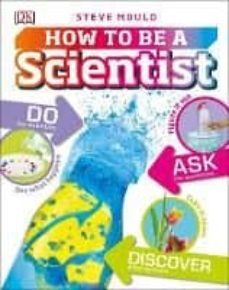
Discover the skills it takes to become a scientist in DK's new science book for kids with science presenter and comedian Steve Mould. Being a scientist isn't just about wearing a lab coat and performing science experiments in test tubes. It's about looking at the world and trying to figure out how it works. As well as simple science experiments for kids to try, How to Be a Scientist will teach them how to think like a scientist and ask questions including: why doesn't pineapple jelly set, how do you grow your own crystals, and how does a black and white image turn to colour? For every scientific concept the child learns they will be encouraged to find new ways to test it further. Fun questions, science games, and real-life scenarios make science relevant to children. In How to be a Scientist the emphasis is on inspiring kids, which means less time spent in stuffy labs and more time in the real world!
Made me go Hydrogen Argon, Hydrogen Argon, Hydrogen Argon. Rufus HoundAs featured in Best stocking-filler books of 2017 - The GuardianWitty and clever writing, every topic is engaging, fun and in some cases laugh-out-loud funny...there are too many highlights to mention - How it Works Why is it impossible to spin your right foot clockwise while you draw a 6 with your right hand? Can you extract DNA from a strawberry daiquiri? Would you make love like a praying mantis? Should you book a holiday on Earth 2.0? The Element in the Room will take you on a rib-tickling, experiment-fuelled adventure to explain everyday science that is staring you in the face. If you are sci-curious, pi-curious or just the-end-is-nigh-curious then this is the book for you.Steve Mould and Helen Arney are two thirds of science comedy phenomenon Festival of the Spoken Nerd. As a trio they have appeared on QI, created their own experimental* comedy show Domestic Science for Radio 4, toured their stand-up science shows to over 50,000 nerds (and non-nerds) and accumulated millions of views on YouTube.These nerds are the real deal - Ben Goldacre, author of BAD SCIENCE They make science fun and understandable which is a great combo.Sandi ToksvigMIND BLOWN.Tim HarfordScience was never such hilarious explosive fun.Richard HerringThis book is 37% better than mine. But it took 100% more nerds to write it.Matt Parker (the other third of Spoken Nerd)
Conoce a las baterías, virus y otros microbios que te rodean pero que son demasiado pequeños para que puedas verlos.En este increíble libro para niños, el científico Steve Mould revela hechos divertidos e interesantes sobre bacterias, virus y otros germenes y microbios. El libro de las bacterias explora por que necesitamos bacterias en nuestro dia a dia e introduce a los lectores a sus compañeros: los virus, los hongos y protozoos.Las baterias son los organismos vivos mas importantes en la Tierra, casi su gran mayoria no son dañinas, sino que nos ayudan a muchas cosas. Sin ellas, no podriamos comer pan o queso, o nuestros cuerpos no podrian ser capaces de funcionar tal y como lo necesitamos.Con impresionantes fotografias, ilustraciones que muestran a estos seres que haran que los cientificos jovenes no quieran cerrar sus paginas.
Conoce a las baterías, virus y otros microbios que te rodean pero que son demasiado pequeños para que puedas verlos. En este increíble libro para niños, el científico Seve Mould revela hechos divertidos e interesantes sobre bacterias, virus y otros germenes y microbios. The bacteria book explora por que necesitamos bacterias en nuestro dia a dia e introduce a los lectores a sus compañeros: los virus, los hongos y protozoos. Las baterias son los organismos vivos mas importantes en la Tierra, casi su gran mayoria no son dañinas, sino que nos ayudan a muchas cosas. Sin ellas, no podriamos comer pan o queso, o nuestros cuerpos no podrian ser capaces de funcionar tal y como lo necesitamos. Con impresionantes fotografias, ilustraciones que muestran a estos seres que haran que los cientificos jovenes no quieran cerrar sus paginas.