This volume aims to provide a new framework for the analysis of securitization processes, increasing our understanding of how security issues emerge, evolve and dissolve. Securitisation theory has become one of the key components of security studies and IR courses in recent years, and this book represents the first attempt to provide an integrated and rigorous overview of securitization practices within a coherent framework. To do so, it organizes securitization around three core assumptions which make the theory applicable to empirical studies: the centrality of audience, the co-dependency of agency and context and the structuring force of the dispositif. These assumptions are then investigated through discourse analysis, process-tracing, ethnographic research, and content analysis and discussed in relation to extensive case studies. This innovative new book will be of much interest to students of securitisation and critical security studies, as well as IR theory and sociology.
La sécurité est-elle mieux pensée par ceux qui la critiquent ? De Foucault à Butler, de Bourdieu à Bauman, de Horkheimer à Honneth, les intellectuels qui se sont intéressés à nos sociétés ont permis
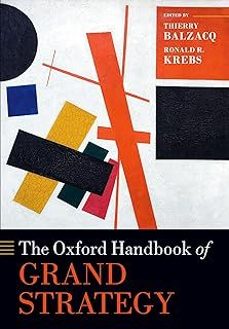
A clearly articulated, well-defined, and relatively stable grand strategy is supposed to allow the ship of state to steer a steady course through the roiling seas of global politics. However, the obstacles to formulating and implementing grand strategy are, by all accounts, imposing. The Oxford Handbook of Grand Strategy addresses the conceptual and historical foundations, production, evolution, and future of grand strategy from a wide range of standpoints. The seven constituent sections present and critically examine the history of grand strategy, including beyond the West; six distinct theoretical approaches to the subject; the sources of grand strategy, ranging from geography and technology to domestic politics to individual psychology and culture; the instruments of grand strategy's implementation, from military to economic to covert action; political actors', including non-state actors', grand strategic choices; the debatable merits of grand strategy, relative to alternatives; and the future of grand strategy, in light of challenges ranging from political polarization to technological change to aging populations. The result is a field-defining, interdisciplinary, and comparative text that will be a key resource for years to come.
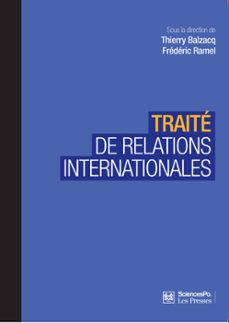
Longtemps qualifi ées de « science américaine », les relations internationales sont lun des secteurs les plus porteurs du marché universitaire mondial : offres de cours, programmes de recherche, inté