Sinopsis
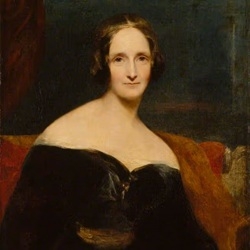
Frankenstein; or, The Modern Prometheus is a novel written by the English author Mary Wollstonecraft Shelley that tells the story of a young science student Victor Frankenstein, who creates a grotesque but sentient creature in an unorthodox scientific experiment. Shelley started writing the story when she was 18, and the first edition of the novel was published anonymously in London in 1818, when she was 20. Shelleys name first appeared on the second edition, published in France in 1823.
Shelley traveled through Europe in 1814, journeying along the River Rhine in Germany with a stop in Gernsheim which is just 17 km (10 mi) away from Frankenstein Castle, where, two centuries before, an alchemist was engaged in experiments. Later, she traveled in the region of Geneva (Switzerland)—where much of the story takes place—and the topic of galvanism and other similar occult ideas were themes of conversation among her companions, particularly her lover and future husband, Percy Shelley. Mary, Percy, Lord Byron and John Polidori decided to have a competition to see who could write the best horror story. After thinking for days, Shelley dreamt about a scientist who created life and was horrified by what he had made; her dream later evolved into the novels story.
Frankenstein is infused with elements of the Gothic novel and the Romantic movement, and is also considered to be one of the earliest examples of science fiction. Brian Aldiss has argued that it should be considered the first true science fiction story because, in contrast to previous stories with fantastical elements resembling those of later science fiction, the central character "makes a deliberate decision" and "turns to modern experiments in the laboratory" to achieve fantastic results. It has had a considerable influence in literature and popular culture and spawned a complete genre of horror stories, films and plays.
Since the novels publication, the name "Frankenstein" has often been used to refer to the monster itself, as it is in the stage adaptation by Peggy Webling. This usage is sometimes considered erroneous, but usage commentators regard it as well-established and acceptable. In the novel, the monster is identified by words such as "wretch", "creature", "monster", "demon", and "it". Speaking to Victor Frankenstein, the wretch refers to himself as "the Adam of your labours", and elsewhere as someone who "would have" been "your Adam", but is instead "your fallen angel."
Shelley traveled through Europe in 1814, journeying along the River Rhine in Germany with a stop in Gernsheim which is just 17 km (10 mi) away from Frankenstein Castle, where, two centuries before, an alchemist was engaged in experiments. Later, she traveled in the region of Geneva (Switzerland)—where much of the story takes place—and the topic of galvanism and other similar occult ideas were themes of conversation among her companions, particularly her lover and future husband, Percy Shelley. Mary, Percy, Lord Byron and John Polidori decided to have a competition to see who could write the best horror story. After thinking for days, Shelley dreamt about a scientist who created life and was horrified by what he had made; her dream later evolved into the novels story.
Frankenstein is infused with elements of the Gothic novel and the Romantic movement, and is also considered to be one of the earliest examples of science fiction. Brian Aldiss has argued that it should be considered the first true science fiction story because, in contrast to previous stories with fantastical elements resembling those of later science fiction, the central character "makes a deliberate decision" and "turns to modern experiments in the laboratory" to achieve fantastic results. It has had a considerable influence in literature and popular culture and spawned a complete genre of horror stories, films and plays.
Since the novels publication, the name "Frankenstein" has often been used to refer to the monster itself, as it is in the stage adaptation by Peggy Webling. This usage is sometimes considered erroneous, but usage commentators regard it as well-established and acceptable. In the novel, the monster is identified by words such as "wretch", "creature", "monster", "demon", and "it". Speaking to Victor Frankenstein, the wretch refers to himself as "the Adam of your labours", and elsewhere as someone who "would have" been "your Adam", but is instead "your fallen angel."

eReader Vivlio Light 6 con 10 € de descuento
Disfruta de tus lecturas este otoño con el eReader Vivlio Light 6 y ahorra 10 €. Oferta válida hasta el 5 de octubre o hasta agotar existencias (250 unidades).






Léelo en cualquier dispositivo


Ficha Técnica
Editorial: Autor-editor
ISBN: 9788826044019
Idioma: Inglés
Fecha de lanzamiento: 29/03/2004
Especificaciones del producto
Recibe novedades de Mary Shelley directamente en tu email
Reseñas sobre - FRANKENSTEIN - (EBOOK)
Comparte tu experiencia con la comunidad lectora.
0 Reseñas
5 0
4 0
3 0
2 0
1 0
Sólo por opinar entras en el sorteo mensual de tres tarjetas regalo valoradas en
20€
Publicar una opinión supone haber leído y aceptado las
bases del sorteo
"Tu opinión tiene premio".