
ALL OUR WORLDLY GOODS
¿Quieres que te avisemos si lo volvemos a recibir?
Federico García Lorca
Lorca, el escritor que cambió la literatura para siempre
A 90 años de su asesinato, la voz de Lorca sigue viva en una obra que continúa inspirando a nuevas generaciones. El estreno de La bola negra invita a redescubrir el legado de uno de los grandes nombres de nuestra literatura.
Ver más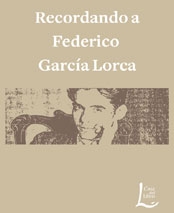
Sinopsis
In haunting ways this wonderful, compelling novel prefigures Suite Française and some of the themes of Némirovsky’s great unfinished sequence of novels. All Our Worldly Goods, though, is complete, and exquisitely so – a perfect novel in its own right. First published in France in 1947, after the author’s death, it is a gripping story of family life and starcrossed lovers, of money and greed, set against the backdrop of France from 1911 to 1940 between two terrible wars. Pierre and Agnès marry for love against the wishes of his parents and the family patriarch, the tyrannical industrialist Julien Hardelot, provoking a family feud which cascades down the generations. This is Balzac or The Forsyte Saga on a smaller, more intimate scale, the bourgeoisie observed close-up with Némirovsky’s characteristically sly humour and clear-eyed compassion. Full of drama and heartbreak, telling observation of the devastating effects of two wars on a small town and an industrial family, this is Némirovsky at the height of her powers. The exodus and flow of refugee humanity through the town in both wars foreshadows Suite Française, but differently, because this is Northern France, near the Somme, and the town itself is twice razed. Taut, evocative and beautifully paced, the novel points up with heartbreaking detail and clarity how close were those two wars, how history repeated itself, tragically, shockingly... It opens in the Edwardian era, on a fashionable Normandy beach, and ends with a changed world, under Nazi occupation.
Ficha Técnica
Editorial: Chatto & Windus
ISBN: 9780701182137
Idioma: Inglés
Encuadernación: Tapa dura
Fecha de lanzamiento: 19/11/2008
Año de edición: 2008
Especificaciones del producto

Recibe novedades de Irène Némirovsky directamente en tu email
Reseñas sobre ALL OUR WORLDLY GOODS
Comparte tu experiencia con la comunidad lectora.
0 Reseñas
Sólo por opinar entras en el sorteo mensual de tres tarjetas regalo valoradas en
20€