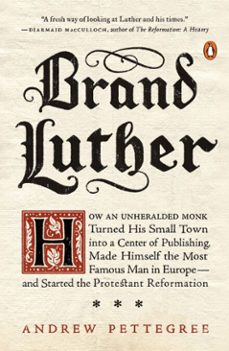
A revolutionary look at Martin Luther, the Reformation, and the birth of publishing, on the eve of the Reformations 500th anniversary When Martin Luther posted his theses on the door of the Wittenberg church in 1517, protesting corrupt practices, he was virtually unknown. Within months, his ideas spread across Germany, then all of Europe; within years, their author was not just famous, but infamous, responsible for catalyzing the violent wave of religious reform that would come to be known as the Protestant Reformation and engulfing Europe in decades of bloody war. Luther came of age with the printing press, and the path to glory of neither one was obvious to the casual observer of the time. Printing was, and is, a risky businessthe questions were how to know how much to print and how to get there before the competition. Pettegree illustrates Luthers great gifts not simply as a theologian, but as a communicator, indeed, as the worlds first mass-media figure, its first brand. He recognized in printing the power of pamphlets, written in the colloquial German of everyday people, to win the battle of ideas. But that wasnt enoughnot just words, but the medium itself was the message. Fatefully, Luther had a partner in the form of artist and businessman Lucas Cranach, who together with Wittenbergs printers created the distinctive look of Luthers pamphlets. Together, Luther and Cranach created a product that spread like wildfireit was both incredibly successful and widely imitated. Soon Germany was overwhelmed by a blizzard of pamphlets, with Wittenberg at its heart; the Reformation itself would blaze on for more than a hundred years. Publishing in advance of the Reformations 500th anniversary, Brand Luther fuses the history of religion, of printing, and of capitalismthe literal marketplace of ideasinto one enthralling story, revolutionizing our understanding of one of the pivotal figures and eras in human history.
Ver más