Antropólogo económico, autor y miembro de la Royal Society of Arts. Es catedrático del Instituto de Ciencia y Tecnología Medioambiental de la Universidad Autónoma de Barcelona y profesor visitante del Instituto Internacional de Desigualdades de la London School of Economics. Es editor asociado de la revista World Development, y forma parte del Grupo Asesor Estadístico del Informe sobre Desarrollo Humano de las Naciones Unidas, del consejo asesor del Green New Deal para Europa, y de la Comisión Harvard-Lancet sobre Reparaciones y Justicia Redistributiva. Las investigaciones de Jason se centran en la desigualdad global, la economía política, el postdesarrollo y la economía ecológica. Escribe con regularidad para The Guardian y Foreign Policy, y contribuye a una serie de otros medios en línea. Ha recibido varios premios de enseñanza, entre ellos el Premio Nacional ASA/HEA a la Excelencia en la Enseñanza de la Antropología. Su investigación ha sido financiada por Fulbright-Hays, la National Science Foundation, la Wenner-Gren Foundation, la Charlotte W. Newcombe y el Leverhulme Trust. Es originario de Eswatini.
Recibe novedades de Jason Hickel directamente en tu email

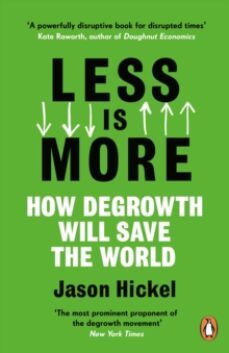
Nuestro planeta está en problemas. Pero, ¿cómo podemos revertir la crisis actual y crear un futuro sostenible? La respuesta es: DECRECIMIENTO. El mundo ha despertado por fin a la realidad del colapso climatico y ecologico. Ahora debemos enfrentarnos a su causa principal. El capitalismo exige una expansion perpetua, que esta devastando el mundo vivo. Solo hay una solucion que conducira a un cambio significativo e inmediato: el decrecimiento. Si queremos tener una oportunidad de detener la crisis, tenemos que frenar y restablecer el equilibrio. Tenemos que cambiar nuestra forma de ver la naturaleza y nuestro lugar en ella, pasando de una filosofia de dominacion y extraccion a otra basada en la reciprocidad y la regeneracion. Tenemos que evolucionar mas alla de los dogmas del capitalismo hacia un nuevo sistema que sea adecuado para el siglo XXI. ¿Pero que pasa con el empleo? ¿Y la salud? ¿Y el progreso? Este libro aborda estas cuestiones y ofrece una vision inspiradora de como podria ser una economia postcapitalista. Una economia mas justa, mas solidaria y mas divertida. Una economia que no solo nos sacara de la crisis actual, sino que nos devolvera el sentido de conexion con un mundo rebosante de vida. Tomando menos, podemos llegar a ser mas. Menos es mas es la llamada de atencion que necesitamos. Al poner de manifiesto el colapso ecologico y el sistema que lo esta provocando, Hickel muestra como podemos devolver a nuestra economia el equilibrio con el mundo vivo y construir una sociedad prospera para todos. Esta es nuestra oportunidad de cambiar el rumbo, pero debemos actuar ahora.
A powerfully disruptive book for disrupted times ... If you're looking for transformative ideas, this book is for you.' KATE RAWORTH, economist and author of Doughnut EconomicsA Financial Times Book of the Year______________________________________Our planet is in trouble. But how can we reverse the current crisis and create a sustainable future? The answer is: DEGROWTH.Less is More is the wake-up call we need. By shining a light on ecological breakdown and the system that's causing it, Hickel shows how we can bring our economy back into balance with the living world and build a thriving society for all. This is our chance to change course, but we must act now.
________________Theres no understanding global inequality without understanding its history. In The Divide, Jason Hickel brilliantly lays it out, layer upon layer, until you are left reeling with the outrage of it all. - Kate Raworth, author of Doughnut Economics· The richest eight people control more wealth than the poorest half of the world combined.· Today, 60 per cent of the worlds population lives on less than $5 a day.· Though global real GDP has nearly tripled since 1980, 1.1 billion more people are now living in poverty.For decades we have been told a story: that development is working, that poverty is a natural phenomenon and will be eradicated through aid by 2030. But just because it is a comforting tale doesnt make it true. Poor countries are poor because they are integrated into the global economic system on unequal terms, and aid only helps to hide this. Drawing on pioneering research and years of first-hand experience, The Divide tracks the evolution of global inequality - from the expeditions of Christopher Columbus to the present day - offering revelatory answers to some of humanitys greatest problems. It is a provocative, urgent and ultimately uplifting account of how the world works, and how it can change for the better.
Nuestro planeta está en problemas. Pero, ¿cómo podemos revertir la crisis actual y crear un futuro sostenible? La respuesta es: DECRECIMIENTO.El mundo ha despertado por fin a la realidad del colapso climatico y ecologico. Ahora debemos enfrentarnos a su causa principal. El capitalismo exige una expansion perpetua, que esta devastando el mundo vivo. Solo hay una solucion que conducira a un cambio significativo e inmediato: el decrecimiento.Si queremos tener una oportunidad de detener la crisis, tenemos que frenar y restablecer el equilibrio. Tenemos que cambiar nuestra forma de ver la naturaleza y nuestro lugar en ella, pasando de una filosofia de dominacion y extraccion a otra basada en la reciprocidad y la regeneracion. Tenemos que evolucionar mas alla de los dogmas del capitalismo hacia un nuevo sistema que sea adecuado para el siglo XXI.¿Pero que pasa con el empleo? ¿Y la salud? ¿Y el progreso? Este libro aborda estas cuestiones y ofrece una vision inspiradora de como podria ser una economia postcapitalista. Una economia mas justa, mas solidaria y mas divertida. Una economia que no solo nos sacara de la crisis actual, sino que nos devolvera el sentido de conexion con un mundo rebosante de vida. Tomando menos, podemos llegar a ser mas.Menos es mas es la llamada de atencion que necesitamos. Al poner de manifiesto el colapso ecologico y el sistema que lo esta provocando, Hickel muestra como podemos devolver a nuestra economia el equilibrio con el mundo vivo y construir una sociedad prospera para todos. Esta es nuestra oportunidad de cambiar el rumbo, pero debemos actuar ahora.
A powerfully disruptive book for disrupted times ...If youre looking for transformative ideas, this book is for you.KATE RAWORTH, economist and author of Doughnut EconomicsA Financial Times Book of the Year______________________________________Our planet is in trouble. But how can we reverse the current crisis and create a sustainable future? The answer is: DEGROWTH.Less is More is the wake-up call we need. By shining a light on ecological breakdown and the system thats causing it, Hickel shows how we can bring our economy back into balance with the living world and build a thriving society for all. This is our chance to change course, but we must act now.______________________________________A masterpiece... Less is More covers centuries and continents, spans academic disciplines, and connects contemporary and ancient events in a way which cannot be put down until its finished.DANNY DORLING, Professor of Geography, University of OxfordJason Hickel shows that recovering the commons and decolonizing nature, cultures, and humanity are necessary conditions for hope of a common future in our common home.VANDANA SHIVA, author of Making Peace With the EarthThis is a book we have all been waiting for. Jason Hickel dispels ecomodernist fantasies of "green growth". Only degrowth can avoid climate breakdown. The facts are indisputable and they are in this book.GIORGIS KALLIS, author of DegrowthCapitalism has robbed us of our ability to even imagine something different; Less is More gives us the ability to not only dream of another world, but also the tools by which we can make that vision real.ASAD REHMAN, director of War on WantOne of the most important books I have read ... does something extremely rare: it outlines a clear path to a sustainable future for all.RAOUL MARTINEZ, author of Creating FreedomJason Hickel takes us on a profound journey through the last 500 years of capitalism and into the current crisis of ecological collapse. Less is More is required reading for anyone interested in what it means to live in the Anthropocene, and what we can do about it.ALNOOR LADHA, co-founder of The RulesExcellent analysis...This book explores not only the systemic flaws but the deeply cultural beliefs that need to be uprooted and replaced. ADELE WALTON