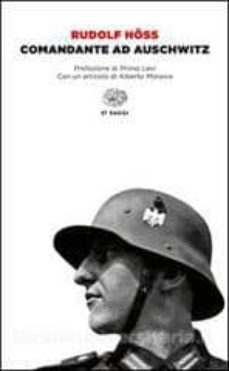
Yo, comandante de Auschwitz es el autorretrato de uno de los personajes más monstruosos de todos los tiempos: Rudolf Höss, el hombre que seguramente más supo sobre el modo en que los nazis intentaron
Presentato da Primo Levi, il documento che per la prima volta ha illuminato dall'interno la mentalita e la psicologia dei nazisti, e la storia e il funzionamento delle officine della morte. Rudolf Hoss, ufficiale delle SS, fu per due anni il comandante del piu grande campo di sterminio nazista, quello di Auschwitz, in cui vennero uccisi piu di due milioni di ebrei. Processato da un tibunale polacco alla fine della guerra, venne condannato a morte. In carcere, in attesa dell'esecuzione, scrisse questa autobiografia. Si tratta di un documento impressionante che ci consente di cogliere dal vivo l'insanabile contraddizione tra l'enormita dei delitti e le giustificazioni addotte.
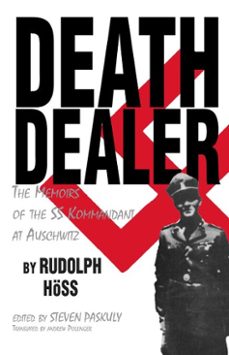
By his own admission, SS Kommandant Rudolf Hesss was historys greatest mass murderer, having personally supervised the extermination of approximately two million people, mostly Jews, at the death camp in Auschwitz, Poland. Death Dealer is the first complete translation of Hesss memoirs into English. These bone-chilling memoirs were written between October 1946 and April 1947. At the suggestion of Professor Sanislaw Batawia, a psychologist, and Professor Jan Shen, the prosecuting attorney for the Polish War Crimes Commission in Warsaw, Hess wrote a lengthy and detailed description of how the camp developed, his impressions of the various personalities with whom he dealt, and even the extermination of millions in the gas chambers. This written testimony is perhaps the most important document attesting to the Holocaust, because it is the only candid, detailed, and (for the most part) honest description of the Final Solution from a high-ranking SS officer intimately involved in carrying out the plans of Hitler and Himmler. With the cold objectivity of a common hit-man, Hoss chronicles the discovery of the most effective poison gas, and the technical obstacles that often thwarted his aim to kill as efficiently as possible. Staring at the horror without reacting, Hess allowed conditions at Auschwitz to reduce human beings to walking skeletons - then he labelled them as subhumans fit only to die. Readers will witness Hesss shallow rationalizations as he tries to balance his deeds with his increasingly disturbed, yet always ineffectual, conscience.