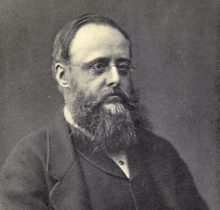
The popularity of Wilkie Collins is as unquestionable as his mannerism, and when this story bears the title I Say No, it is characteristic of him that the meaning of this title is not made clear until three fourths of the novel has been read. The plot is, as usual, very carefully and strongly conceived, and the reader is allowed to think that he has the clue to the secret at an early period, whereas the secret is really quite different from what seems most probable. The general effect of I Say No is much less sensational than many of the authors former stories. The situations are not void of theatrical tone, but they are distinctly quieter and more subdued. It is in fact more the society play than the melodrama, but it is dramatic. The women of, Mr. Collinss novels are usually weaker than his men, and his old and eccentric women are better than his young girls. Perhaps this is because all his women are really men worked over, so to speak, and his old women are the most natural because age has a tendency to assimilate the characteristics of the sexes. Miss La Sor, in the new story, is decidedly disagreeable, but her vices are rather those of human nature than of a woman, and she is drawn with a certain vague indeterminateness, as though the author originally meant her to fill a much more important place, but had thought better of his purpose. The story indeed is considerably shorter than most of Mr. Collinss novels, and the plot is far less intricate. This the reader will be apt to resent, for it is plot, and plenty of it, he wants when he goes to this author. Wilkie Collins has always had a large audience, however, and unless his powers fail, as this latest of his works certainly does not appear to indicate, he always will be read widely. And this is right, for he is a thoroughly wholesome and sweet writer, whoever punishes Vice and rewards Virtue, and gives us the most fascinating and complicated of plots, and thrills us with cunning detective enterprises, and surprises us with novel modes of committing crimes, and getting married, and perpetrating, bigamy, and all kinds of exciting affairs. And the world will prob ably always prefer novelists of this school to those who delight in analyzing thoughts and sentiments, and who eschew action and plot as vulgar and coarse.
Puedes leer los eBooks directamente con nuestro visor online, accediendo a nuestra web desde tu móvil o tu ordenador, sin necesidad de descargar nada. Accede a tu área de usuario y empieza a leer.
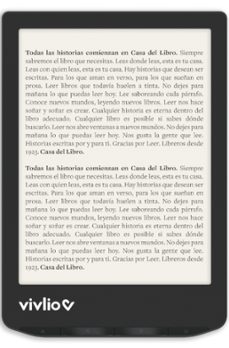
eReader Vivlio Casa del Libro
Disfruta de la sensación de un libro físico, pero con las ventajas de un libro digital. Puedes comprar tu eReader Vivlio Casa del Libro aquí.
Empezar a utilizarlo es muy fácil, solo tienes que sincronizar la biblioteca con tu usuario y contraseña y a disfrutar de la lectura.
Otros eReaders
Puedes conectar tu eReader a tu ordenador y enviar libros al dispositivo utilizando Adobe Digital Editions.
- Adobe Digital Editions ya no es compatible con los eReaders Sony.
- Los eReaders de Amazon (Kindle) no son compatibles con Adobe Digital Editions, ya que solo permiten libros comprados en Amazon.
* ¿Cómo conseguir tu eBook gratis? Aproximadamente una semana después de la compra, recibirás un correo electrónico con un código promocional. Para canjearlo, solo tendrás que añadir el eBook La casa de las amapolas al carrito en casadellibro.com e introducir el código recibido en el momento del pago para que el eBook te salga gratis.
El código tiene una validez de dos semanas desde su recepción. Pasado ese plazo, caducará. Solo puede utilizarse una vez.
La promoción es válida para pedidos realizados en casadellibro.com
Si compras el dispositivo en nuestras librerías, podrás conseguir tu eBook gratis solo si eres Socio.
Ficha Técnica
Editorial: Jazzybee Verlag
ISBN: 9783849658465
Idioma: Inglés
Fecha de lanzamiento: 24/08/2020
Especificaciones del producto
Escrito por Wilkie Collins
Wilkie Collins (1824-89) fue un distinguido escritor victoriano, amigo y colaborador de Dickens, que alcanzó gran fama por sus novelas, con las que contribuyó a la creación del género detectivesco y logró altísimas cotas de calidad en el campo del melodrama. "La Piedra Lunar" es, junto con "La mujer de blanco", también publicada en esta serie, su novela más célebre.