

























Sinopsis
The author of the acclaimed Proust and the Squid follows up with a lively, ambitious, and deeply informative book that considers the future of the reading brain and our capacity for critical thinking, empathy, and reflection as we become increasingly dependent on digital technologies.
A decade ago, Maryanne Wolf’s Proust and the Squid revealed what we know about how the brain learns to read and how reading changes the way we think and feel. Since then, the ways we process written language have changed dramatically with many concerned about both their own changes and that of children. New research on the reading brain chronicles these changes in the brains of children and adults as they learn to read while immersed in a pervasive digital culture.
Drawing deeply on this research, this book comprises a series of letters Wolf writes to us—her beloved readers—to describe her concerns and her hopes about what is happening to our cognitive processes and the reading brain as it unavoidably changes to adapt to digital mediums. Wolf raises difficult questions, including:
Will children learn to incorporate the full range of "deep reading" processes that are at the core of the expert reading brain? Will the mix of a seemingly infinite set of distractions for children’s attention and their quick access to immediate, voluminous information alter their ability to think for themselves? With information at their fingertips, will the next generation learn to build their own storehouse of knowledge, which could impede the ability to make analogies and draw inferences from what they know? Will all these influences change the formation in children and the use in adults of "slower" cognitive processes like critical thinking, personal reflection, imagination, and empathy that comprise deep reading and that influence both how we think and how we live our lives? How can we preserve deep reading processes in future iterations of the reading brain?Concerns about attention span, critical reasoning, and over-reliance on technology are never just about children—Wolf herself has found that, though she is a reading expert, her ability for deep reading has been impacted by extensive screen reading as she has become increasingly dependent on screens.
Wolf draws on neuroscience, literature, education, child development, and philosophy and blends historical, literary, and scientific facts with down-to-earth examples and warm anecdotes to illuminate complex ideas that culminate in a proposal for a biliterate reading brain. Provocative and intriguing, Reader, Come Home EPB is a roadmap that provides a cautionary but hopeful perspective on the impact of technology on our brains and our most essential intellectual capacities—and what this could mean for our future.









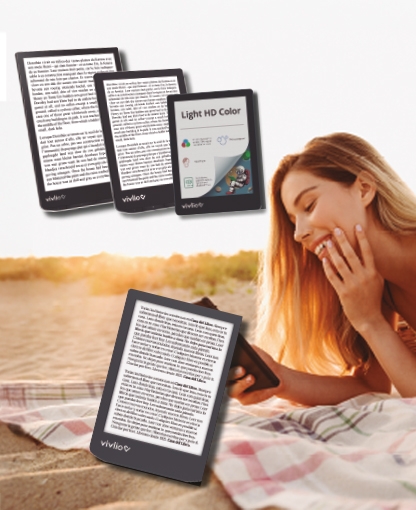
Léelo en cualquier dispositivo


Ficha Técnica
Editorial: Harper
ISBN: 9780062388797
Idioma: Inglés
Fecha de lanzamiento: 14/08/2018
Especificaciones del producto
Recibe novedades de Maryanne Wolf directamente en tu email
Reseñas sobre Reader, Come Home
Comparte tu experiencia con la comunidad lectora.
0 Reseñas
Sólo por opinar entras en el sorteo mensual de tres tarjetas regalo valoradas en
20€







*Descuento de 15 euros en el eReader Vivlio Light Zen, válido para pedidos realizados en casadellibro.com del 13 de julio al 2 de agosto y solo para los 300 primeros compradores, hasta fin de existencias.